The chewing surfaces of back teeth have deep grooves and pits that trap food and bacteria, even with regular brushing. Dental sealants are a thin protective coating applied to those surfaces to seal out decay before it starts. It’s one of the simplest and most effective preventive treatments in dentistry, and it works for both kids and adults.
At Bite Club in Bucktown, Dr. Nga Huynh recommends sealants as part of a proactive approach to cavity prevention, especially for patients whose back teeth have naturally deep grooves that are tough to keep clean.

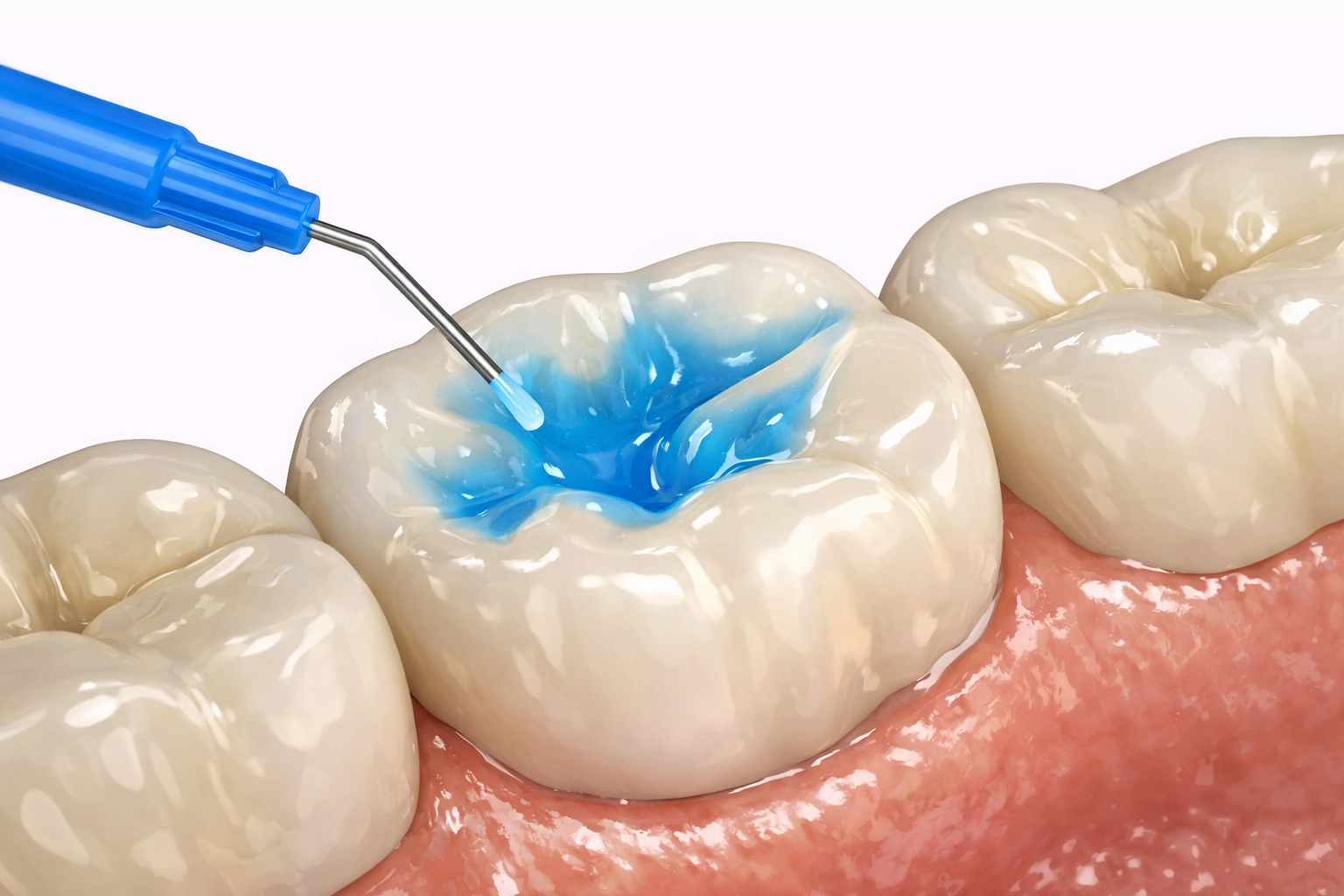
A sealant is a thin, tooth-colored or clear resin that flows into the grooves and fissures on the chewing surfaces of premolars and molars. Once applied, it hardens and creates a smooth, protective barrier that prevents food particles and bacteria from settling into the tiny crevices where cavities most commonly develop.
The application is quick, painless, and doesn’t require any drilling or anesthesia. Each tooth takes about a minute. The tooth is cleaned, a conditioning gel is applied briefly and rinsed off, and the sealant material is painted onto the surface and cured with a light. That’s it.
Sealants bond directly to the enamel and can last several years with normal wear. Dr. Huynh checks your sealants at every dental exam and can reapply them if they’ve worn down or chipped.
Children and teenagers. Sealants are most commonly recommended for kids once their permanent molars come in, typically around ages 6 and 12. Cavity risk is highest in the first few years after a molar erupts because the enamel is still maturing and the grooves are at their deepest. Sealants applied early can prevent cavities entirely on those surfaces.
Adults with deep grooves. If your back teeth have naturally deep fissures and you’ve had a history of cavities in those areas, sealants can still make a difference. They’re a smart option for adults who want extra protection and haven’t had their molar grooves sealed before.
Patients with high cavity risk. Patients who are prone to decay due to dry mouth, dietary habits, or difficulty maintaining consistent brushing can benefit from the added barrier sealants provide.
Sealants are not a substitute for brushing and flossing. They protect the chewing surfaces of back teeth, but cavities can still develop between teeth and along the gumline where sealants don’t reach. That’s why they work best as part of a full preventive plan that includes regular cleanings, fluoride, and good home care.
At Bite Club, preventive care is the foundation of everything we do. Sealants fit naturally alongside regular exams and cleanings, fluoride treatments, and patient education about brushing and flossing technique.
For families with kids, sealants are one of the highest-value preventive investments you can make. The cost of sealing a tooth is a fraction of the cost of filling a cavity, and the protection lasts for years. It’s the kind of proactive step that saves time, money, and discomfort down the road.
Dr. Huynh evaluates every patient’s teeth for sealant candidacy during routine exams. If your child’s permanent molars have come in, or if you’ve been getting cavities on your back teeth despite good brushing, ask about sealants at your next visit.
Contact Bite Club or call (312) 602-0036 to schedule an appointment at our Bucktown office.
Sealants are part of a broader prevention strategy. They work alongside cleanings, fluoride, and good home care to keep cavities from forming in the first place.
When a sealant has failed and a cavity has formed, a composite filling is the next step. We restore the tooth and discuss whether new sealants make sense for the rest of the molars.
Sealants are a small upstream investment that helps prevent the larger downstream work of crowns and bridges. Most patients with crowns wish they’d had sealants when they were younger.
Sealants are clear or tooth-colored, so they don’t change how the tooth looks. They’re invisible once placed, which makes them an easy yes for patients of any age.
Sealants help avoid the chain of decay, then extraction, then replacement. The whole goal is keeping teeth healthy enough to never need surgical work in the first place.
Sealants don’t affect TMJ directly, but a healthy mouth with intact teeth is part of what keeps the bite balanced over time.
The cavities that lead to root canals usually start in the deep grooves of molars, exactly the surfaces sealants are designed to protect.
Crowded teeth are harder to keep clean, which raises cavity risk. Invisalign improves access for brushing and flossing, complementing prevention strategies.
Not at all. There's no drilling, no shots, no discomfort. The application process is painless and takes about a minute per tooth. Kids tolerate it easily.
Sealants can last up to 10 years with normal wear, though they're most effective in the first few years after application. Dr. Huynh checks them at every exam and can reapply if they've worn or chipped.
Yes. While sealants are most commonly applied to children's newly erupted molars, adults with deep grooves or a history of cavities on chewing surfaces can benefit from sealants too.
Most dental insurance plans cover sealants for children up to age 14 or 16. Coverage for adults is less common but depends on your plan. We'll verify your benefits before your appointment.
Sealants are preventive. They protect surfaces that haven't developed decay yet. If a cavity has already formed, a filling is needed to treat it. Sealants and fillings serve different purposes, and both have a role in maintaining healthy teeth.