Missing several teeth changes everything: how you eat, how you speak, how you feel about smiling. Dentures restore function and appearance for patients who have lost multiple teeth or all of their teeth, giving you back the ability to chew comfortably, speak clearly, and smile with confidence.
At Bite Club in Bucktown, Dr. Nga Huynh works with patients to find the right denture solution based on how many teeth are missing, the condition of remaining teeth and bone, and what fits your lifestyle and budget.
Full dentures. Full dentures replace an entire arch of teeth (upper, lower, or both). They rest on the gums and are held in place by suction and the natural contours of your mouth. Modern full dentures are designed to look natural and fit comfortably, and they’re custom-made from impressions of your mouth so the fit is specific to you.
Partial dentures. Partial dentures are used when you still have some healthy natural teeth remaining. A partial fills in the gaps with prosthetic teeth attached to a metal or acrylic framework that clasps onto your existing teeth for stability. Partials prevent your remaining teeth from shifting into the empty spaces.
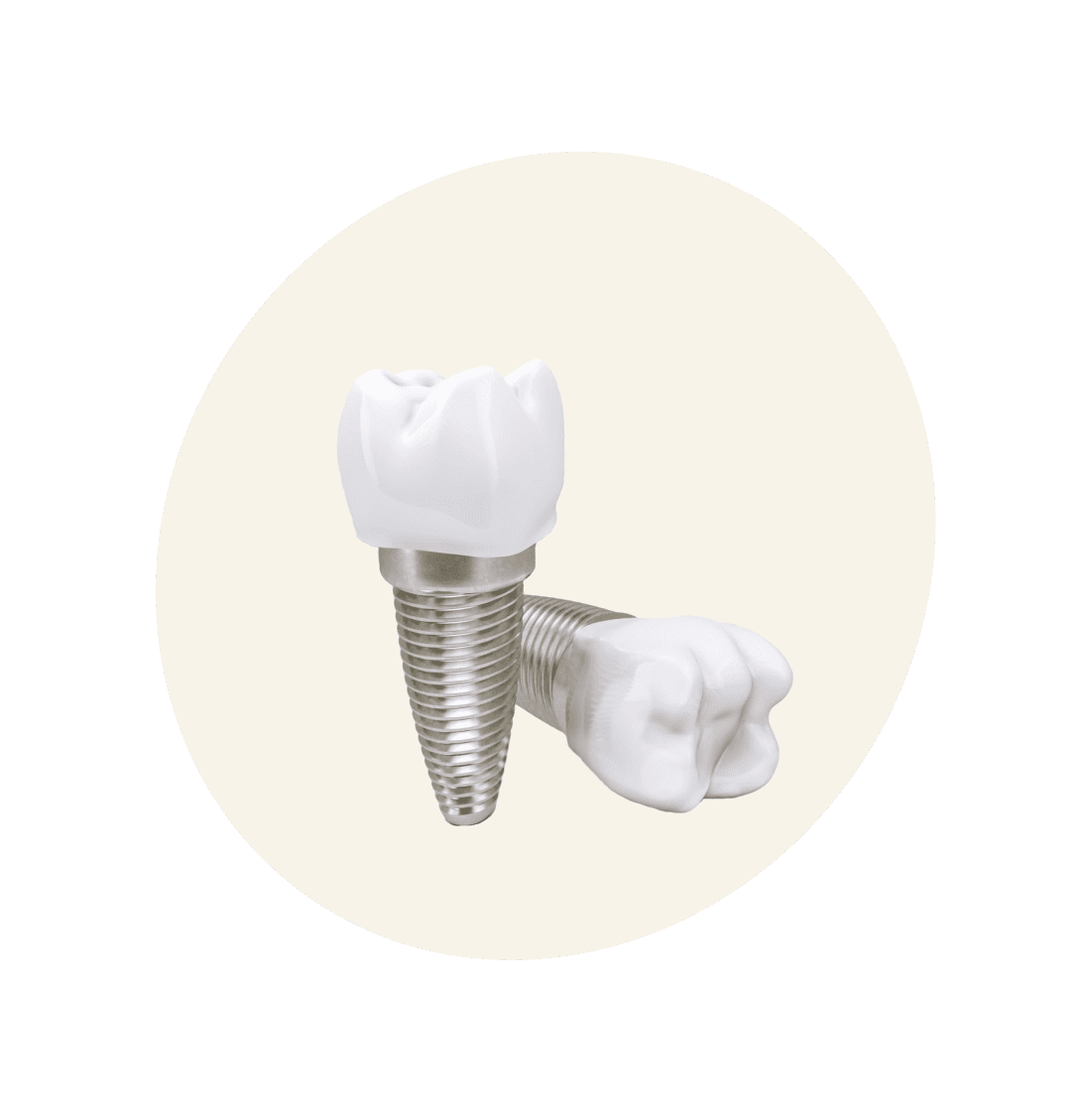
Implant-supported dentures. For patients who want a more stable and permanent option, dentures can be anchored to dental implants placed in the jawbone. Implant-supported dentures don’t slip, don’t require adhesive, and preserve bone that would otherwise deteriorate. They’re the closest thing to having your natural teeth back.
Dr. Huynh will evaluate your situation and discuss the pros and cons of each option so you can make a confident decision.
Getting dentures takes several appointments over a few weeks.
Initial evaluation. Dr. Huynh examines your mouth, reviews your dental and medical history, and discusses your goals. If extractions are needed before dentures can be placed, we plan those into the timeline.
Impressions and measurements. We take detailed impressions of your gums and any remaining teeth, along with measurements of your bite and jaw relationship. These guide the lab in creating dentures that fit your mouth and look natural.
Try-in appointment. Before your final dentures are fabricated, you’ll try on a wax model to check the fit, bite, and appearance. This is your chance to see how the teeth will look and request any adjustments to shape, shade, or alignment.
Final fitting. Your completed dentures are placed, and we make fine adjustments to the fit. Dr. Huynh walks you through how to insert and remove them, how to care for them, and what to expect during the adjustment period.
Follow-up visits. It takes time for your mouth to adjust to dentures. Sore spots and minor fit issues are normal in the first few weeks. We schedule follow-up visits to address any discomfort and make adjustments as needed.
Adjusting to dentures takes patience. Eating, speaking, and wearing them comfortably all improve with practice and time. Start with soft foods and gradually reintroduce firmer textures. Reading aloud can help you adjust to speaking with dentures faster.
Proper care extends the life of your dentures. Remove and rinse them after eating, brush them daily with a denture brush (not regular toothpaste, which is too abrasive), and soak them overnight in a denture cleaning solution. Even with full dentures, continue visiting Bite Club for regular checkups so we can examine your gums, check the fit of your dentures, and screen for oral cancer.
Over time, the shape of your gums and jawbone changes, which can affect how your dentures fit. Relining or remaking dentures every 5 to 7 years is typical to maintain a comfortable, secure fit.
If you’re missing teeth and want to explore your options, contact Bite Club or call (312) 602-0036 to schedule a consultation.
Whether you have natural teeth, dentures, or a mix, regular exams and cleanings keep the rest of your mouth healthy. Denture wearers still need oral cancer screening, gum care, and check-ups on remaining teeth.
For partial denture cases, the remaining natural teeth still need protection from cavities. We treat any active decay before fabricating the partial.
Crowns sometimes anchor partial dentures. We coordinate crown work and partial denture fabrication to keep the system stable.
Modern dentures are far more natural-looking than the dentures of the past. We design the shade, shape, and gum tone to match a real smile, not a generic one.
The surgical preparation for a denture, including extractions and any necessary smoothing of the bone. We handle these in-house and time the surgery so the denture fits well from day one.
A new denture changes the bite. We assess and adjust to keep the jaw comfortable and the denture stable.
For partial denture cases, we sometimes save a strategic natural tooth with a root canal so it can serve as a partial anchor.
For partial denture wearers, Invisalign isn’t always a fit, but in some hybrid cases the natural teeth can still benefit from alignment work.
The process typically takes 4 to 6 weeks from your first appointment to final placement. If extractions are needed first, the timeline may be longer to allow for healing before the final denture is fitted.
It takes practice, but most patients return to eating a wide variety of foods. Start with soft foods cut into small pieces and work up to firmer textures. Very hard or sticky foods may remain challenging. Implant-supported dentures offer significantly better chewing force than traditional dentures.
Cost depends on the type of denture (full, partial, or implant-supported) and the complexity of your case. We accept all PPO plans and provide a detailed cost estimate at your consultation so you can plan accordingly.
Modern dentures are far more natural-looking than older designs. The teeth are crafted in a range of shapes, sizes, and shades, and the gum-colored base is designed to mimic natural gum tissue. Dr. Huynh customizes the appearance during the try-in phase so the result looks right for your face.
If you have enough bone to support implants, implant-supported dentures offer major advantages: better stability, stronger chewing force, no adhesive, and bone preservation. They cost more upfront but eliminate many of the common frustrations associated with traditional dentures. Dr. Huynh can help you decide which option makes the most sense.