
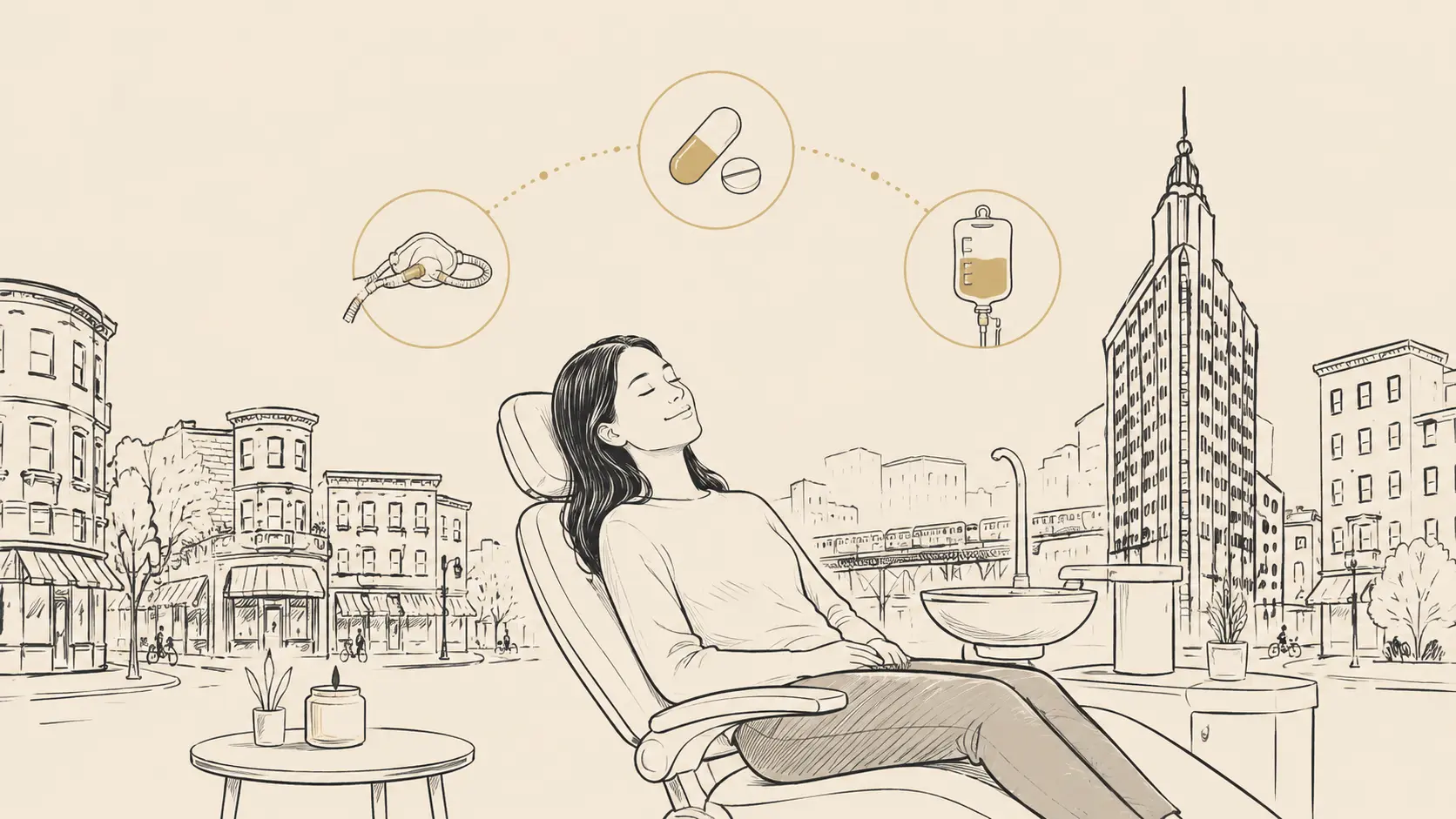

Sedation Dentistry: What Are Your Options?
Plenty of people put off dental care for years, not because they do not care about their teeth, but because sitting in the chair makes them feel trapped, panicky, or physically sick.
If that describes you, sedation is worth understanding properly. Most patients only know two versions of it: laughing gas, or being put completely under. There is a lot of ground in between, and the middle options are where most anxious patients actually land.
Here is what exists, how each one feels, and how to figure out which fits you.
What sedation dentistry actually means
Sedation is about how aware and how relaxed you are. It is separate from pain control.
Local anesthetic is what stops you from feeling the work. Sedation is what stops you from caring that the work is happening. Almost every sedation appointment still uses local anesthetic, because sedation on its own does not block sensation.
That surprises people, so it is worth repeating: sedation calms you down, numbing keeps you comfortable, and most appointments use both.
Nitrous oxide
Nitrous oxide, commonly called laughing gas, is the lightest option and the most widely used.
You breathe a mix of nitrous oxide and oxygen through a small nose mask. Within a few minutes you feel warm, floaty, and noticeably less bothered. You stay awake, you can answer questions, and you remember the appointment.
What makes nitrous useful is how quickly it reverses. At the end of the visit you breathe pure oxygen for a few minutes and the effect clears. Most patients can drive themselves home and go back to work the same day.
Good fit for: mild to moderate nerves, patients who dislike needles, gag-reflex issues, kids, and anyone who cannot arrange a ride home.
Less useful for: severe phobia, very long appointments, or anyone who cannot breathe comfortably through the nose.
Oral conscious sedation
This one is a pill, usually taken about an hour before the appointment, sometimes with a second dose the night before if sleep is a problem.
You stay awake and able to respond, but deeply relaxed. Many patients drift in and out and remember very little afterward. That memory gap is often the whole point. If your fear is fed by remembering past appointments, not forming new bad memories changes how you feel about the next visit.
You will need someone to drive you both ways, and you should plan to rest for the remainder of the day. The grogginess lingers longer than people expect.
Good fit for: moderate to high anxiety, patients who need several procedures in one sitting, and people who have avoided dental care for years.
Worth knowing: the effect varies more from person to person than nitrous does. Body weight, other medications, and individual metabolism all change how strongly you respond, which is why your health history review is not a formality.
IV sedation
With IV sedation, medication goes directly into a vein, which means the provider can adjust the level during the appointment rather than waiting for a pill to take effect.
This is deeper. Most patients remember almost nothing. You are monitored throughout, with oxygen levels, heart rate, and blood pressure tracked continuously.
In Illinois, dentists must hold specific state-issued permits to provide moderate sedation, deep sedation, or general anesthesia. Practices that do not hold the relevant permit work with a licensed anesthesia provider or refer to one. Any practice should tell you clearly which arrangement applies before you book. If they are vague about it, ask again.
Good fit for: severe dental phobia, complex surgical procedures, long multi-step appointments, and patients with a strong gag reflex that lighter sedation does not settle.
Requirements: a driver, fasting beforehand as instructed, and a full day cleared.
General anesthesia
Complete unconsciousness, managed by an anesthesiologist or a dental anesthesiologist, typically in a hospital or surgical setting.
This is reserved for specific situations: extensive oral surgery, patients with certain medical or developmental conditions, or cases where nothing lighter has worked. It is not the standard answer for anxiety, and any practice pushing it as a first option for a routine filling is worth a second opinion.
How to figure out which one you need
Start by naming what actually bothers you. The answer points to the option.
“I am fine once we start, I just get worked up beforehand.” Nitrous usually handles this. So does scheduling a longer appointment so nothing feels rushed.
“The needle is the problem.” Nitrous plus topical numbing gel before the injection. Many patients who thought they needed heavy sedation only needed this.
“I have avoided the dentist for years and I am ashamed of what you will find.” This is not really a sedation question. It is a judgment question, and it is one of the most common reasons people delay care. Sedation can help, but so does knowing in advance that nobody is going to lecture you.
“I cannot sit still that long.” Oral or IV sedation, or splitting the work across shorter visits.
“I have had panic attacks in the chair.” Oral or IV sedation, with a longer conversation about your history first.
What sedation does not fix
Sedation makes appointments possible. It does not make dental problems smaller.
Patients sometimes use sedation to get through one emergency, feel relieved, then disappear for another five years. The anxiety is untouched and the underlying issues keep growing.
The better use is as a bridge. Sedation gets you through the backlog of work comfortably, and then routine visits, which are shorter and involve far less, become manageable without it. Plenty of patients who started with oral sedation now come in for cleanings with nothing at all.
Our approach to general dentistry is built around that path: get the hard part done in a way you can tolerate, then keep things simple afterward.
Safety and who should think twice
Sedation is well established and safe when the screening is done properly. That screening matters.
Tell us about:
- Sleep apnea or heavy snoring, which changes how sedatives affect breathing
- Every medication and supplement you take, including anything for anxiety or sleep
- Pregnancy or the possibility of it
- Heart, lung, liver, or kidney conditions
- Past reactions to anesthesia or sedatives, including reactions family members have had
- Alcohol or recreational drug use, which affects dosing and interactions
None of this is a test you can fail. It is how the dose gets set correctly.
The practical details people forget to ask
Cost and coverage. Sedation is usually billed separately from the procedure. Coverage varies by plan and many plans treat sedation for anxiety alone as out of pocket. Ask for the specific numbers before your appointment, not after. We verify coverage in advance so there are no surprises at checkout.
Time. Nitrous costs you nothing extra in time. Oral and IV sedation cost you the day.
Your driver. Anything beyond nitrous requires a responsible adult to take you home. Rideshare alone does not count for IV sedation at most practices.
Eating. Follow the fasting instructions exactly. Appointments get canceled over this more often than anything else.
Starting from zero
If it has been years and you do not know where to begin, the first visit does not have to include treatment. An exam, X-rays, and a conversation about what you can handle is a completely reasonable first appointment.
New patients can check our new patient specials before booking, and if anxiety is the reason for the gap, say so when you call. It changes how we schedule you.
Ready to talk it through? Call us at (312) 602-0036 or request an appointment and tell us what worries you most. We will go over which sedation dentistry options fit your situation, what each one costs, and what your first visit would look like.
