

How Long Does Dental Bonding Last?
Dental bonding usually lasts 3 to 10 years before it needs a touch up or a redo. That range comes from Cleveland Clinic’s patient guide to dental bonding.
Your habits and the amount of bonding you have decide where you land in that range. The good news is that bonding is easy to repair when it wears.
What is dental bonding?
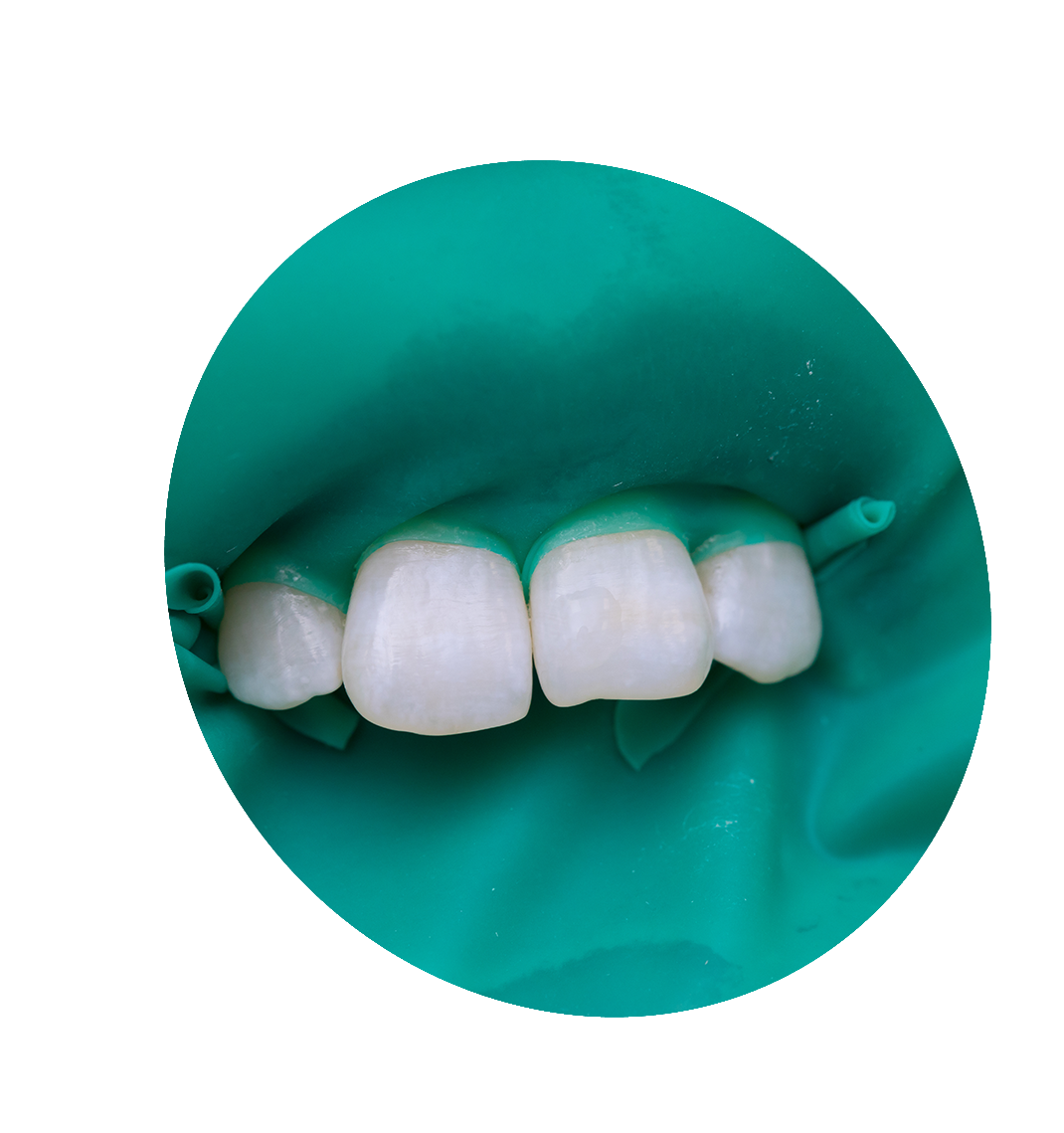
Bonding is a tooth colored resin. Your dentist paints it onto a tooth, shapes it by hand, hardens it with a blue light and polishes it smooth.
We use it to fix chips, close small gaps and cover marks on a tooth. Most bonding is done in one visit, and many people need no numbing for it.
Why does bonding last 3 years for one person and 10 for another?
Cleveland Clinic names two big factors: your oral habits and how many teeth were treated. In the chair, we see a few more things that make a difference.
- The spot on the tooth. A patch on the biting edge of a front tooth takes force every time you bite into an apple. A small patch near the gum takes almost none.
- How big it is. A small chip repair has less to wear than a whole new tooth surface.
- Grinding. Clenching at night wears resin down faster than daytime chewing does.
- What you drink. Coffee, tea, red wine and smoking all stain resin over time.
Does dental bonding stain?
Yes, more than porcelain does. Cleveland Clinic notes that bonding resists stains, but not as well as porcelain restorations.
If your morning starts with a coffee on Milwaukee Avenue, plan on that. Rinse with water after coffee or tea, and brush twice a day.
Whitening gel does not lighten bonding. If you want whiter teeth, whiten first, and then we match the bonding to your new shade.
What chips bonding?
Resin is strong for daily chewing. A hard, sudden bite is what usually breaks off a corner.
Cleveland Clinic lists the same habits we warn people about.
- Biting your fingernails.
- Chewing on pens.
- Using your teeth to open packages.
Chewing ice and biting hard candy belong on that list too. If you grind at night, a night guard protects the bonding while you sleep.
How do you make bonding last longer?
Brush twice a day with a soft brush and floss once a day. Plaque along the edge of bonding can lead to a cavity under it, the same as with a filling.
We cover that risk in more detail in do teeth decay under composite bonding.
Come in for your checkups and cleanings. A polish at each visit brings back some of the shine, and we can spot a rough edge before it chips.
How can you tell bonding needs work?
Old bonding gives clues long before it fails. Look in a mirror in good light and check the edges.
- The bonding looks darker or more yellow than the teeth next to it.
- A thin brown line shows where the resin meets the tooth.
- Your tongue finds a rough spot or a sharp corner.
- The surface looks dull next to your other teeth.
None of these is an emergency. Mention them at your next visit, and we can polish, patch or redo the spot.
Is bonding a good fit for you?
Bonding works well for small chips, small gaps and a tooth or two with a mark on it. It is also a good choice when you want a quick fix without shaping much of the tooth.
It is a weaker fit for big changes in shape across many teeth. Heavy grinders wear through it faster too, so we may talk about a night guard or porcelain instead.
Can old bonding be fixed?
Yes, and that is a big plus of bonding. Your dentist can add fresh resin to a chipped spot, or polish off a stain on the surface.
Bonding that has worn thin or turned dark can be taken off and done again. The tooth under it usually needs little or no extra shaping.
Porcelain veneers last longer, and they cost more and need more of the tooth shaped away. Bonding is often the easier first step, and you can move to veneers later if you want.
Bonding at our Bucktown office
We are at 1908 N Western Ave in Bucktown, near the Western Blue Line stop. Wicker Park and Logan Square are a short ride away.
At your visit, we check the tooth, talk about your habits and pick a shade that matches the teeth around it. Our page on dental bonding in Chicago walks through the full visit.
Come see us
Got a chip, a gap or old bonding that looks tired? Call our front desk or tap Book Now at the top of this page, and we will take a look.
