
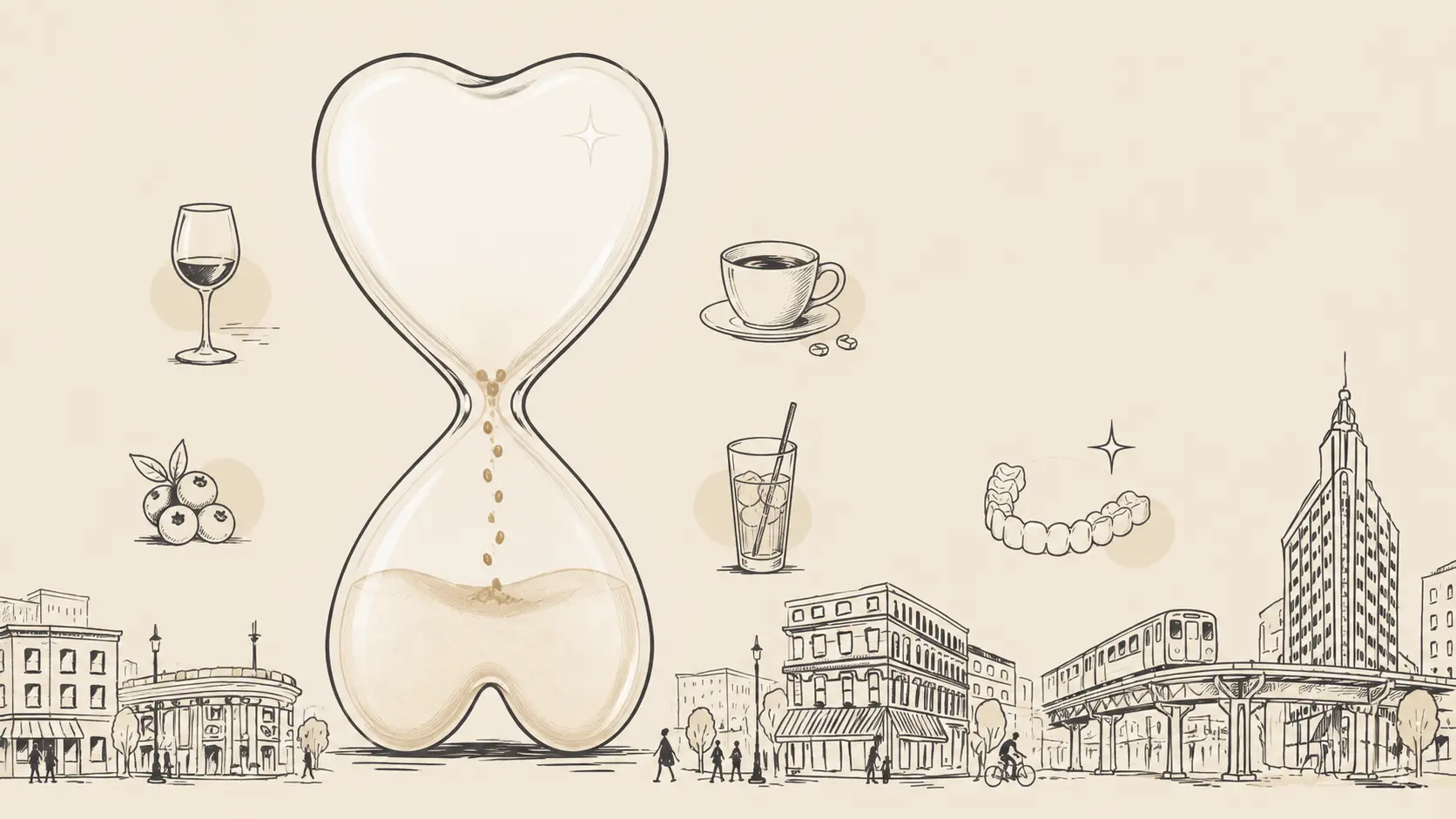

How Long Does Professional Teeth Whitening Last?
You paid for the treatment. Your smile looks brighter than it has in years. So the question sitting in the back of your mind is fair: how long before the coffee wins again?
Here is a straight answer, plus the parts most whitening articles leave out.
The short answer
For most people, professional whitening results hold somewhere between six months and two years.
That range is wide on purpose. The biggest factor in how long your results last is not the strength of the gel. It is what happens in the weeks and months after you walk out the door.
Two patients can get the exact same treatment on the same day. One drinks three black coffees a day and smokes. The other drinks coffee through a straw and keeps up with cleanings. A year later, their smiles do not look anything alike.
Why teeth go dull again
Tooth enamel is not smooth like glass. Under a microscope it has tiny pores. Dark pigments from food and drink settle into those pores over time and build up in layers. Whitening gel lifts those pigments out. It does not seal the surface or change how your enamel behaves afterward.
So the staining process starts again the moment you finish treatment. It just starts from a much lighter baseline.
The usual culprits:
- Coffee, black tea, and espresso
- Red wine and dark beer
- Cola and dark sports drinks
- Tomato sauce, soy sauce, curry, and balsamic vinegar
- Berries, especially blueberries and pomegranate
- Smoking and vaping
Tobacco is the one that wipes out results fastest. Tar is sticky and it grabs onto enamel in a way coffee never does.
Not all discoloration comes from the outside
This is the part that surprises people. Some tooth discoloration lives inside the tooth, not on the surface, and whitening gel cannot reach it.
Internal discoloration usually comes from:
- A tooth that was injured or had a root canal years ago
- Certain antibiotics taken during childhood, which can leave gray or banded shading
- Natural aging, as enamel thins and the yellower layer underneath shows through
- Too much fluoride during tooth development, which can leave white or brown mottling
Whitening can still help these teeth look better, but the result is often uneven. One tooth stays darker than the rest. When that happens, bonding or veneers usually give a cleaner outcome. That is a conversation worth having before you spend money on whitening, not after. Our cosmetic dentistry team looks at this during the consultation so nobody is disappointed later.
Crowns, veneers, and fillings do not whiten
Whitening gel only works on natural tooth structure. Dental work made from porcelain or composite keeps whatever shade it was made in.
If you have a crown on a front tooth or tooth-colored fillings along your smile line, whitening your natural teeth can leave that dental work looking darker by comparison. It was matched to your old shade.
This is fixable. It just needs planning. The usual approach is to whiten first, let the color settle for about two weeks, then replace the visible restorations to match the new shade. If several front teeth need work at once, a smile makeover plan handles the sequencing so everything ends up the same color.
In-office versus take-home trays
Both work. They just work differently.
In-office whitening uses a stronger gel applied by a dental team, with your gums protected. You see most of the change in one visit. It is the better choice when you have an event coming up and limited time.
Custom take-home trays use a milder gel over a couple of weeks. The trays are made from molds of your teeth, so the gel sits evenly instead of leaking onto your gums like a one-size drugstore tray does.
Take-home results tend to hold a little longer for one simple reason: you keep the trays. When your smile starts to drift a shade or two, you run a short touch-up at home instead of booking another appointment. That makes maintenance easy, and easy maintenance is what actually keeps results going.
Many patients do both. One in-office session to get there fast, then trays to stay there.
The first 48 hours matter most
Right after whitening, the pores in your enamel are temporarily more open. Pigment gets in far more easily during this window.
For two days after treatment, stick to lighter foods and drinks:
- Water, milk, and sparkling water
- Chicken, fish, rice, pasta with light sauce
- White cheeses, plain yogurt, bananas, apples
- Skip red wine, coffee, tea, cola, tomato sauce, and dark berries
Two days of care buys you months of results. It is the highest-return thing you can do.
How to keep results longer
None of this is complicated. It is just consistent.
Use a straw for dark drinks. Iced coffee, iced tea, and cola all get past your front teeth almost entirely. It feels a little silly at first. It works.
Rinse with water after staining foods. You do not need to brush right away. Brushing immediately after something acidic like wine or citrus can actually wear at softened enamel. Rinse, wait about 30 minutes, then brush.
Keep your cleanings on schedule. Professional cleanings remove the surface film that dulls your smile between whitening sessions. Patients who come in twice a year almost always report longer-lasting results than patients who come in once every few years.
Touch up before it is obvious. A single night in your trays every few months keeps the color steady. Waiting until your teeth look noticeably dull means starting closer to square one.
Choose your toothpaste sensibly. Whitening toothpaste works by polishing away surface stain, not by bleaching. It helps a little. Highly abrasive charcoal pastes can scratch enamel over time, which makes stain stick more, not less.
What about sensitivity?
Temporary sensitivity is common with whitening and it usually fades within a day or two. It happens because the gel moves through enamel and briefly irritates the nerve inside the tooth.
If you have had painful whitening experiences before, say so at your consultation. Lower-concentration gel, shorter wear times, and a desensitizing paste for a week beforehand all make a real difference. Nobody should be white-knuckling their way through a cosmetic treatment.
When whitening is not the right first step
Whitening an unhealthy mouth is a bad idea. Gel reaching an untreated cavity or inflamed gum tissue hurts, and the result will not look right anyway.
Active decay, gum disease, cracked fillings, and untreated sensitivity all get handled first. That is not upselling. Whitening over a problem just puts a bright coat of paint on something that still needs fixing.
The realistic expectation
Professional whitening is maintenance, not a permanent change. Think of it like hair color rather than a tattoo.
If you drink coffee daily and never touch up, expect somewhere around six months to a year before you notice a shift. If you use a straw, keep up with cleanings, and run a touch-up tray a few times a year, two years or more is realistic.
Either way, the results are far more predictable than drugstore strips, and the process is safer for your gums.
Curious what your teeth would actually respond to? Book a whitening consultation with our team at Bite Club in Bucktown. We will look at what is causing the discoloration, tell you honestly whether professional teeth whitening will get you where you want to go, and lay out what maintenance looks like before you commit. Call (312) 602-0036 or book your visit online.
