If you snore loudly, wake up feeling exhausted despite a full night’s sleep, or your partner has noticed you stop breathing during the night, sleep apnea may be the cause. It’s more common than most people realize, and it affects far more than just your sleep. Untreated sleep apnea is linked to high blood pressure, heart disease, stroke, and daytime fatigue that impacts everything from work performance to driving safety.
At Bite Club in Bucktown, Dr. Nga Huynh offers oral appliance therapy as a comfortable, CPAP-free alternative for patients with mild to moderate obstructive sleep apnea.

Obstructive sleep apnea (OSA) occurs when the soft tissues in the back of your throat collapse during sleep, partially or completely blocking your airway. Each time this happens, your brain briefly wakes you up to restore breathing. These interruptions can happen dozens or even hundreds of times per night without you being fully aware of them.
The result is fragmented sleep that never reaches the deep, restorative stages your body needs. Common symptoms include loud snoring, gasping or choking during sleep, morning headaches, daytime drowsiness, difficulty concentrating, and irritability.
OSA is diagnosed through a sleep study, which can often be done at home with a portable monitor prescribed by your physician. If you’ve already been diagnosed, or if you suspect sleep apnea based on your symptoms, Dr. Huynh can evaluate whether oral appliance therapy is a good fit.
CPAP (continuous positive airway pressure) machines are the most common treatment for sleep apnea, but many patients find them uncomfortable, noisy, and difficult to travel with. Compliance rates with CPAP are low because the mask and airflow make it hard for some people to fall asleep.
Oral appliance therapy offers an alternative for patients with mild to moderate OSA or those who can’t tolerate CPAP. The appliance is a custom-made device that looks like a sports mouthguard. You wear it while you sleep, and it works by repositioning your lower jaw slightly forward, which keeps the airway open and prevents the soft tissue collapse that causes apnea events.
The appliance is fabricated from impressions of your teeth, so it fits precisely and stays comfortable throughout the night. It’s small, portable, silent, and easy to care for. Most patients adapt to wearing it within a week or two.
Dr. Huynh works with your physician or sleep specialist to coordinate care and verify that the appliance is effectively reducing your apnea events. Follow-up sleep studies or home monitoring may be recommended to confirm the treatment is working.
Your dentist may be the first healthcare provider to notice signs of sleep apnea. Tooth grinding (bruxism), worn enamel, scalloped tongue edges, and a narrow or crowded airway are all clues that Dr. Huynh screens for during routine exams.
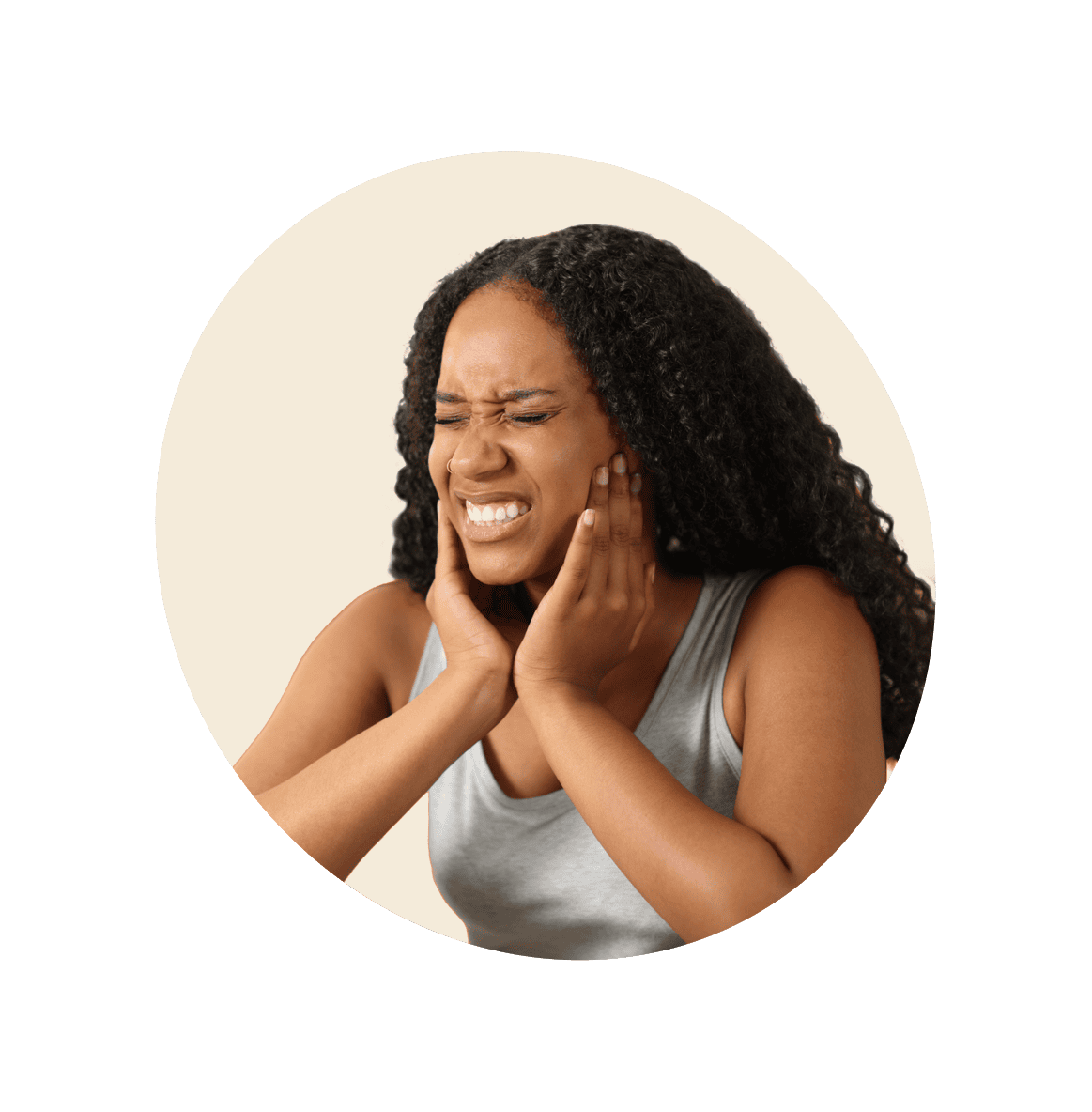
There’s significant overlap between sleep apnea and TMJ disorder. Many patients who grind their teeth at night also have some degree of airway obstruction. Addressing the sleep apnea can reduce grinding, and a night guard can protect your teeth while the underlying cause is being treated.
If you’ve been told you grind your teeth, experience chronic jaw pain or headaches, or wake up feeling unrested despite sleeping enough hours, it’s worth exploring whether sleep apnea is a contributing factor. Dr. Huynh can screen for signs and refer you for a sleep study if appropriate.
Contact Bite Club or call (312) 602-0036 to schedule an evaluation at our Bucktown office.
Beyond emergency care, our Bucktown dental office offers a full range of general dentistry services designed to maintain your oral health for life. We focus on preventive care, early detection, and education to keep your teeth and gums strong and healthy. With a gentle approach and modern techniques, our team makes each visit comfortable and thorough. Learn more about our general dentistry services.
Composite restorations do more than just fill cavities—they restore your teeth to their natural appearance and function. Using high-quality, tooth-colored materials, our Bucktown dental office repairs damage while preserving as much healthy tooth structure as possible. These restorations are often needed after emergency treatment to rebuild damaged teeth.
When teeth need more support than a filling can provide, crowns and bridges offer durable, long-term solutions. Our Bucktown dentists design custom restorations to restore both the function and appearance of your smile. Many emergency situations require crowns to protect weakened teeth. Explore our crowns and bridges options.
Transform your smile with cosmetic dentistry services at our Bucktown dental office. We offer a range of treatments to enhance the appearance of your teeth, using modern techniques and natural-looking materials for beautiful results. After addressing emergency concerns, many patients choose cosmetic treatments to perfect their smile.
We provide expert oral surgery services in Bucktown for teeth that are beyond saving or require surgical intervention. Whether you need an emergency extraction, wisdom teeth removal, or supportive procedures like bone grafting, our team prioritizes your comfort and recovery at every step.
Chronic jaw pain, headaches, and difficulty chewing could be signs of a TMJ disorder. Our Bucktown dental office offers specialized TMJ treatments tailored to relieve your symptoms and restore comfortable jaw function. If your emergency involves jaw trauma or sudden jaw pain, we can diagnose and treat TMJ issues.
Root canal therapy is a conservative way to save severely damaged or infected teeth, and at our Bucktown dental office, it’s gentler and more efficient than you might expect. Using modern techniques and microscope-enhanced precision, we remove infection, relieve pain, and restore your tooth’s strength and function. Learn more about our root canal treatment services.
Achieve a straighter, healthier smile with Invisalign clear aligners. Invisalign is a modern orthodontics solution for straightening teeth, using advanced technology to gently move and align your teeth. At our Bucktown dental office, we create custom Invisalign treatment plans designed to fit seamlessly into your lifestyle—with discreet, comfortable aligners and expert guidance at every step.
Yes. Dentists trained in dental sleep medicine can fabricate and manage oral appliances for mild to moderate obstructive sleep apnea. Dr. Huynh works alongside your physician or sleep specialist to coordinate treatment and monitor results.
For mild to moderate OSA, oral appliances have been shown to be effective at reducing apnea events and improving sleep quality. For severe OSA, CPAP is generally more effective. The best treatment is the one you'll actually use consistently, and for many patients, that's an oral appliance.
Common signs include loud snoring, gasping during sleep, morning headaches, daytime fatigue, and difficulty concentrating. A sleep study (done at a sleep center or at home with a portable monitor) is required for a formal diagnosis. If you recognize these symptoms, talk to your physician or ask Dr. Huynh for a screening.
Many medical insurance plans (not dental) cover oral appliance therapy when sleep apnea has been diagnosed through a sleep study. Coverage varies by plan. We can help you understand your benefits and navigate the process.
Yes. In fact, many sleep apnea appliances provide some protection against grinding as well. Depending on the severity of your bruxism, Dr. Huynh may recommend a combined approach or a dedicated night guard in addition to the sleep appliance.