
Dental Implants Don’t Hurt Like You Think: Separating Fact from Fear
You need to replace a missing tooth. Your dentist mentions implants. Your brain immediately goes to drills, bone, surgery, pain.
The fear is understandable. But it is probably not accurate.
Modern dental implant procedures are not what most people imagine. The reality is far less dramatic than the fear suggests.
Why Implants Sound Scary
Let us be honest about what makes implants frightening.
The procedure involves surgery. A titanium post is placed into your jawbone. That sounds intense. And for many people, anything involving bone sounds painful.
Add to that the general fear of dental work. A 2024 census-matched survey published in the Journal of the American Dental Association found that 72.6% of American adults report some level of dental fear. More than one in four report severe fear.
Fear of pain tops the list of reasons. A global survey of 18,000 people found that 39% of those with dental fear cited pain as their primary concern.
When you combine surgery, bone, and existing dental anxiety, the result is a procedure that sounds terrifying. But the perception does not match the experience.
What Patients Actually Report
Here is the part that surprises most people: implant placement often hurts less than a tooth extraction.
During the procedure, you feel nothing. Local anesthesia completely numbs the area. You may feel pressure or vibration, but not pain. Many patients are surprised by how uneventful the surgery feels.
After the procedure, most patients describe the discomfort as mild to moderate. Think of it as similar to having a tooth pulled. There is soreness. There may be some swelling. But it is manageable with over-the-counter pain medication for most people.
A study tracking patient experiences found that pain levels after implant surgery were generally lower than patients expected beforehand. The anticipation was worse than the reality.
Why Modern Implants Hurt Less
Several factors make today’s implant procedures more comfortable than what patients imagine.
Better anesthesia
Local anesthesia has improved significantly. Dentists can numb the surgical area completely. You will not feel the drilling or placement. The injection itself may cause brief discomfort, but many offices use topical numbing gel first to minimize even that.
Precise planning
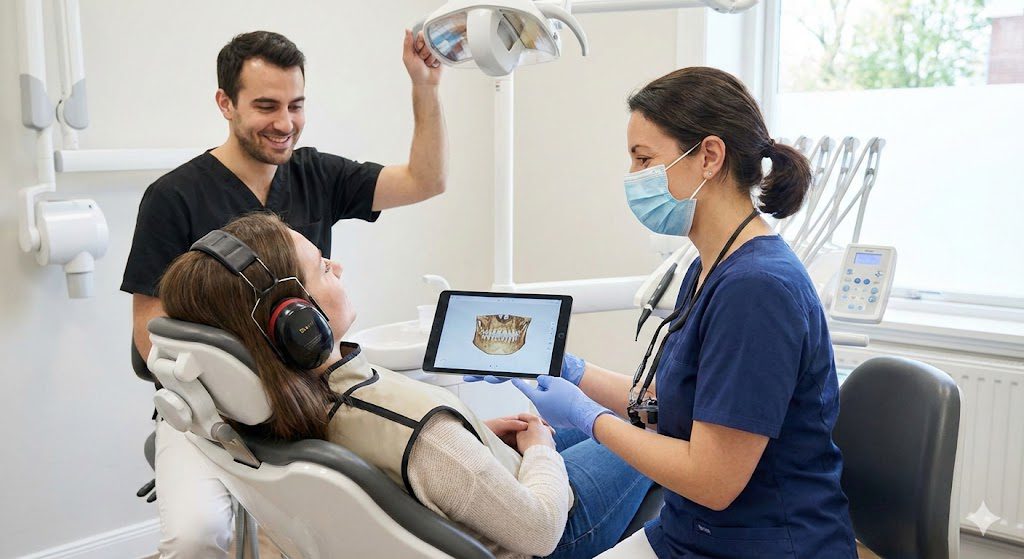
Modern implant dentistry uses 3D imaging and computer-guided placement. The dentist knows exactly where the implant will go before starting. This means less guesswork, smaller incisions, and faster procedures. Less time in surgery means less tissue trauma.
Minimally invasive techniques
Many implant procedures today are far less invasive than older methods. Flapless surgery, where the gum is not cut open and peeled back, is now possible in many cases. This reduces swelling, bruising, and post-operative pain.
Bone is not as sensitive as you think
Here is something most people do not know: bone itself has very few nerve endings. The pain receptors are primarily in the soft tissue, the gums and surrounding area. When the soft tissue is properly numbed, drilling into bone does not hurt.
Sedation Options for Anxious Patients
If you have significant dental anxiety, you do not have to rely on local anesthesia alone.
Nitrous oxide
Also called laughing gas, nitrous oxide provides mild relaxation while keeping you awake and aware. Research shows that most anxious patients feel more comfortable with nitrous oxide. The effects wear off quickly after the procedure, so you can often drive yourself home.
Oral sedation
Taking medication before your appointment creates moderate relaxation. You remain conscious but feel calm and may not remember much of the procedure. Studies show oral sedation significantly increases treatment acceptance among highly anxious patients.
IV sedation
For severe anxiety or complex procedures, IV sedation provides deeper relaxation. You are not fully unconscious, but you are deeply relaxed and unlikely to remember the procedure. Research shows IV sedation has the highest success rates for patients with severe dental phobia.
Talk to your dentist about which option makes sense for you. A good implant provider will have experience managing anxious patients.
The Recovery Timeline
Understanding what to expect after surgery reduces anxiety. Here is a typical recovery timeline.
Day 1
The anesthesia wears off within a few hours. You may have some bleeding, which is controlled with gauze. Swelling begins but is usually minimal. Most patients take over-the-counter pain medication and rest.
Days 2 to 3
Swelling may peak around day two or three. This is normal. Ice packs help. Discomfort is usually manageable with ibuprofen or acetaminophen. Many patients return to work or normal activities within a day or two.
Days 4 to 7
Swelling decreases. Discomfort fades. The surgical site begins to heal. Most patients feel close to normal by the end of the first week.
Weeks 2 to 4
The gum tissue heals around the implant site. Any residual soreness resolves. You return to eating normally, though you may want to avoid chewing directly on the implant area.
Months 2 to 6
The implant fuses with your jawbone in a process called osseointegration. This happens beneath the surface. You do not feel it. Once integration is complete, the final crown is attached.
The most uncomfortable period is typically the first few days. After that, most patients report minimal issues.
Factors That Affect Pain Levels
Not every implant procedure is the same. Several factors influence how much discomfort you might experience.
Number of implants
Placing one implant is simpler than placing several. More implants mean more surgical sites and potentially more soreness afterward.
Bone grafting
If your jawbone lacks sufficient density, you may need bone grafting before or during implant placement. This adds to the procedure and can increase post-operative discomfort. However, many patients still report manageable pain levels.
Sinus lift
Implants in the upper jaw near the sinuses sometimes require a sinus lift to create space. This is a more involved procedure and may result in more swelling and discomfort.
Your general health
Patients in good overall health tend to heal faster with less discomfort. Conditions that affect healing, like uncontrolled diabetes or heavy smoking, can complicate recovery.
Surgical technique
An experienced implant dentist using modern techniques typically produces better outcomes with less discomfort. Skill matters.
What About Complications?
Some people fear that something will go wrong and cause significant pain. Understanding the actual risks helps put this in perspective.
Implant complications are uncommon. A 2024 meta-analysis found that about 4 out of 5 implants survive 20 years. Short-term success rates are even higher, with studies showing 97% success at 10 years.
When complications do occur, they are usually manageable. The most common issues include:
Infection
Rare with proper care. Signs include increased pain, swelling, or discharge after the first few days. Infections are typically treated with antibiotics.
Implant failure
Sometimes an implant does not fuse with the bone. This is disappointing but not necessarily painful. The implant is removed, the area heals, and a new implant can often be placed later.
Nerve damage
Very rare when implants are properly planned. Symptoms include numbness or tingling. Most cases resolve on their own over time.
The vast majority of implant procedures go smoothly with no significant complications.
Managing Your Expectations
Pain is subjective. What feels mild to one person may feel significant to another. But research consistently shows that implant patients report less pain than they expected.
A realistic expectation: you will have some discomfort for a few days. It will be manageable with medication your dentist provides or recommends. By the end of the first week, you will likely feel mostly normal.
If your fear of pain is keeping you from getting implants you need, consider this: living with a missing tooth has its own costs. Bone loss in the jaw. Shifting of surrounding teeth. Difficulty chewing. Self-consciousness about your smile.
The short-term discomfort of implant surgery leads to long-term benefits that last for decades.
Questions to Ask Your Dentist
If pain concerns you, have an honest conversation with your implant provider. Here are questions that help:
What sedation options do you offer?
Know your choices before the day of surgery.
What should I expect for pain levels after the procedure?
A good dentist will give you a realistic picture based on your specific situation.
What pain management will you prescribe?
Understand what medications you will have available and when to use them.
How many implants have you placed?
Experience correlates with smoother procedures and better outcomes.
What signs should prompt me to call you after surgery?
Knowing what is normal and what is not reduces anxiety during recovery.
The Fear Is Worse Than the Reality
Dental anxiety is real and valid. No one should feel ashamed of being nervous about surgery.
But the fear of implant pain is usually worse than the actual experience. Modern anesthesia ensures you feel nothing during the procedure. Improved techniques mean less trauma and faster healing. Most patients are surprised by how manageable the recovery turns out to be.
If missing teeth are affecting your quality of life, do not let fear of pain stop you from exploring implants. The procedure is not painless, but it is far less painful than most people imagine.
Talk to your dentist. Ask questions. Consider sedation if you need it. And know that thousands of patients go through this every day, wondering why they waited so long.