

Invisalign vs. Veneers: Which One Actually Fixes Your Smile Faster?
You want a better smile. You’ve been researching your options. And now you’re stuck between two very different paths: Invisalign or veneers.
On the surface, both promise the same result. Straighter, more attractive teeth. A smile you’re actually proud of. But the way they get there, the timeline, the cost, the tradeoffs, and what happens to your teeth in the process couldn’t be more different.
This isn’t a question of which one is “better.” It’s a question of which one is right for your specific situation. And that depends on what’s actually wrong with your smile, what you’re willing to commit to, and how you feel about irreversible changes to your natural teeth.
What Each One Actually Does
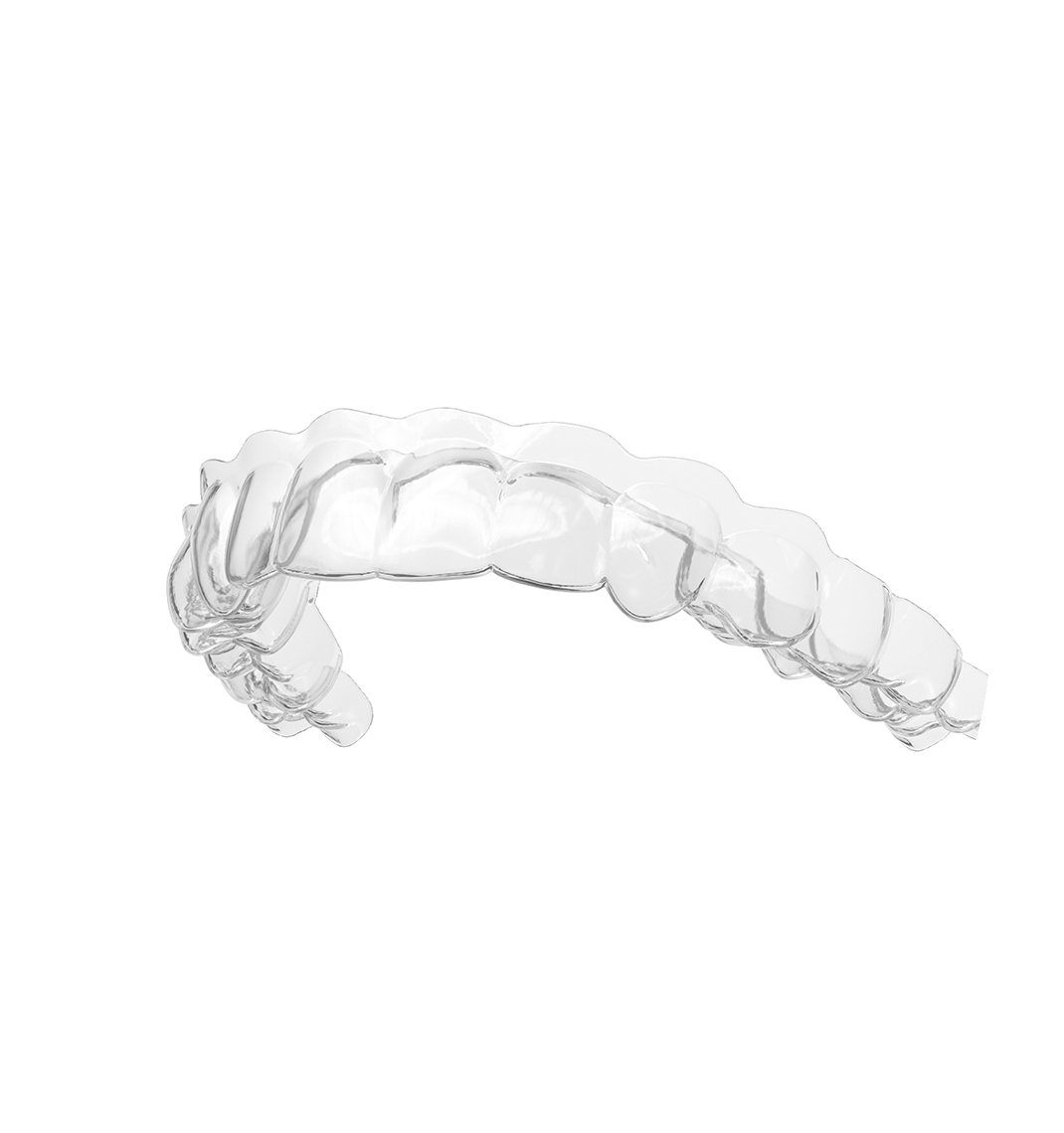
Invisalign moves your existing teeth into better positions using a sequence of custom clear aligners. It corrects crowding, spacing, rotation, and certain bite issues by applying controlled force over time. Your natural teeth stay intact. Nothing is shaved down, bonded over, or permanently altered (beyond their position).
Veneers are thin shells of porcelain or composite material bonded to the front surface of your teeth. They change the appearance of your teeth: their shape, size, color, and alignment (visually). Traditional porcelain veneers require removing a thin layer of enamel from the tooth surface to make room for the veneer. Once that enamel is gone, it doesn’t grow back. You’ll need veneers (or some form of restoration) on those teeth for the rest of your life.
The fundamental difference: Invisalign changes where your teeth are. Veneers change what your teeth look like. Both improve your smile, but one preserves your natural tooth structure and the other permanently modifies it.
The Timeline Comparison
This is usually the first question people ask, and it’s where veneers have a clear advantage.
Veneers: From consultation to final placement, veneers typically take two to four weeks. The first appointment involves tooth preparation and impressions. The lab fabricates your custom veneers over one to two weeks. The second appointment bonds them in place. Some practices offer same-day veneers using in-office milling technology, which compresses the timeline even further.
Invisalign: Treatment time varies by complexity. Minor cases (slight crowding, small gaps) can be completed in 4 to 8 months. Moderate cases take 8 to 14 months. Complex cases may take 18 to 24 months. Add refinement rounds if the initial result needs fine-tuning, plus the ongoing retainer commitment after treatment.
If speed is your primary concern, veneers win. You can walk into a dental office with crooked teeth and walk out with a transformed smile in under a month. With Invisalign, you’re looking at months of gradual change.
But speed comes with tradeoffs. And those tradeoffs matter more than most patients realize at the time they make their decision.
The Cost Comparison
Costs vary by provider, location, and case complexity. Here’s where things generally land in Chicago:
Invisalign: $3,500 to $8,000 for the treatment itself. Add retainers ($200 to $800), potential pre-treatment dental work, and possible refinement costs. The realistic all-in range for most adults is $5,000 to $10,000. For a detailed breakdown, see our hidden costs of Invisalign guide.
Veneers: $800 to $2,500 per tooth for porcelain veneers. Most smile makeovers involve 6 to 10 teeth (the ones visible when you smile). That puts the total at $5,000 to $25,000 for a full set. Composite veneers are cheaper ($250 to $800 per tooth) but don’t last as long.
For a patient with mild crowding who just wants straighter teeth, Invisalign is usually the more affordable option. For a patient who wants to change the shape, size, and color of multiple teeth simultaneously, veneers may provide more value per dollar because they address multiple concerns at once.
The cost comparison gets more interesting over time. Porcelain veneers last 10 to 20 years before they need replacement. Each replacement costs roughly the same as the original. Over 30 years, you could replace your veneers once or twice, adding another $5,000 to $25,000 in lifetime costs.
Invisalign moves your natural teeth, and natural teeth don’t need replacement. The ongoing cost is retainers, which run a few hundred dollars every year or two. Over 30 years, that’s significantly less.
The Reversibility Question
This is the factor that should get the most weight in your decision and usually gets the least.
Invisalign is fully reversible. If you decide halfway through treatment that you don’t want to continue, you stop wearing the aligners. Your teeth may shift back, but nothing has been permanently removed or altered. Your natural tooth structure is intact.
Traditional porcelain veneers are irreversible. To place a porcelain veneer, your dentist removes 0.3 to 0.7mm of enamel from the front surface of the tooth. That enamel is gone permanently. The tooth underneath is now a reshaped, reduced version of itself that cannot function without a veneer covering it.
If a veneer chips, cracks, or debonds, it must be replaced. If the underlying tooth develops decay at the margins, the veneer may need to be removed and the tooth may need a crown. You’re committing to a lifetime of maintaining restorations on those teeth.
No-prep veneers (like Lumineers) are sometimes marketed as a reversible alternative. These are thinner and require minimal or no enamel removal. In practice, they can feel bulky, look opaque, and trap bacteria at the margins if not fitted precisely. They’re a real option for some patients, but “reversible” is generous. Once bonded, removing them without damaging the tooth underneath is difficult.
If your primary issue is tooth position (crowding, spacing, rotation) and your teeth are otherwise healthy in shape, size, and color, Invisalign preserves your natural teeth. Using veneers to fix alignment when the teeth themselves are fine is like remodeling a kitchen to fix a squeaky floor.
When Invisalign Is the Better Choice
Invisalign makes more sense when:
- Your main concern is crowding, spacing, or mild bite issues
- Your teeth are healthy but just in the wrong position
- You want to keep your natural tooth structure intact
- You’re comfortable with a longer treatment timeline for a less invasive result
- You have realistic expectations about gradual improvement over months
- You value the ability to remove the aligners for eating, brushing, and special occasions
Invisalign is also the better first step if you’re considering cosmetic work later. Straightening your teeth first gives your cosmetic dentist better angles, more predictable margins, and a more natural foundation to build on. Many patients who get Invisalign first end up needing fewer (or no) veneers because their straightened teeth already look great.
When Veneers Are the Better Choice
Veneers make more sense when:
- Your teeth have structural issues beyond just position: chips, cracks, severe wear, or misshapen teeth
- You want to change the color of your teeth dramatically and permanently (beyond what whitening can achieve)
- You have teeth that are too small, worn down, or irregularly shaped
- You want to close gaps and change tooth shape simultaneously
- You need results in weeks, not months
- You’ve already had significant dental work on the teeth in question (large fillings, previous bonding, root canals)
Veneers are a legitimate, excellent solution when the teeth themselves need reshaping. They become questionable when they’re used purely to mask alignment issues that could be corrected by moving the teeth instead.
The Combination Approach
For many patients, the best result comes from combining both treatments.
Step one: Invisalign to straighten the teeth and correct bite issues. This takes 6 to 18 months depending on the case.
Step two: Veneers on select teeth that still need cosmetic improvement after straightening. Maybe the two front teeth are worn down or chipped. Maybe one tooth is permanently discolored. Instead of veneering 8 to 10 teeth to mask the alignment issues, you veneer 2 to 4 teeth to refine the final result.
This combination approach gives you the best of both worlds: your natural teeth are preserved wherever possible, and veneers are used only where they’re genuinely needed. It’s more conservative, often more affordable (fewer veneers), and produces results that look more natural.
The Question Most Patients Don’t Ask
Before choosing between Invisalign and veneers, ask your provider this: “If these were your teeth, which would you do?”
An honest provider will give you a straight answer. If your teeth are healthy but crooked, they’ll probably say Invisalign. If your teeth are structurally compromised and need reshaping, they’ll probably say veneers. If the answer is “either one works,” push for specifics about what each option preserves, what it costs long-term, and what happens when it needs maintenance.
Be wary of a provider who pushes veneers for alignment-only issues. Veneers are more expensive per tooth, generate higher revenue for the practice, and require less chair time than months of Invisalign management. That doesn’t mean the recommendation is financially motivated, but it’s worth being aware of the incentive structure.
Making the Decision
The right choice depends on what’s wrong with your smile:
If the problem is position (crowding, gaps, rotation): Invisalign preserves your teeth and corrects the actual issue.
If the problem is structure (chips, wear, shape, severe discoloration): veneers reshape and restore what’s damaged.
If the problem is both: straighten first with Invisalign, then refine with targeted veneers.
At Bite Club, we offer both Invisalign and cosmetic services including veneers and bonding. We’ll tell you which approach makes sense for your teeth, not which one generates the most revenue. Schedule a consultation and we’ll map out your options side by side.
