
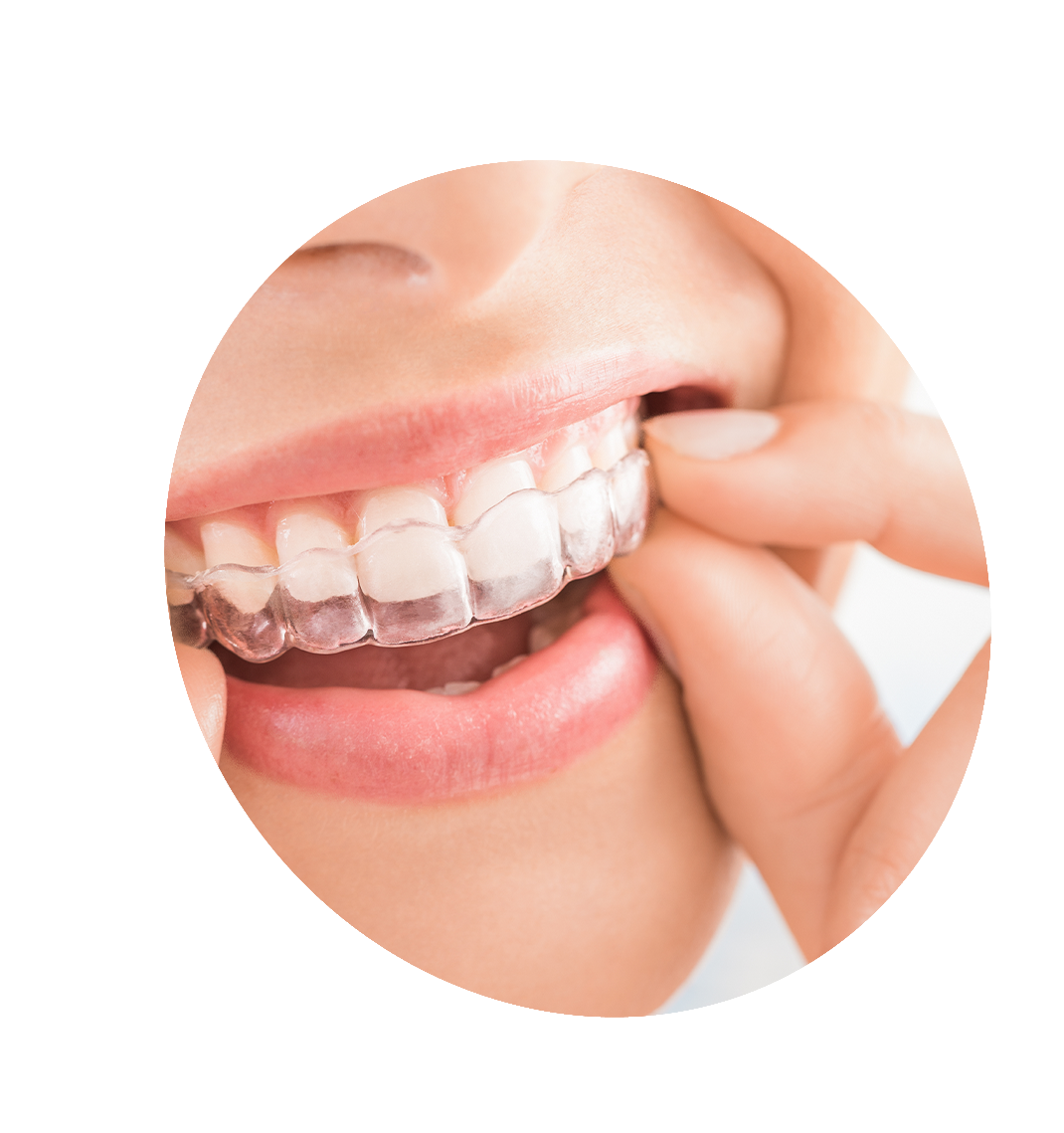

Invisalign in Your 30s and 40s: Why Adult Cases Are Different (and Often Better)
There’s a question that stops a lot of adults from pursuing orthodontic treatment. It’s not about cost or time commitment. It’s simpler than that:
“Am I too old for this?”
If you’re in your 30s or 40s and considering Invisalign, the answer is no. You’re not too old. And your case might actually go better than you expect, for reasons that have nothing to do with age and everything to do with how adult orthodontics works differently from what you remember as a teenager.
Why Adults Think They’ve Missed the Window
Most people associate orthodontics with adolescence. Braces are a teenage rite of passage. By the time you’re 30 or 35, the assumption is that the window has closed, or that straightening teeth at this age is somehow less effective.
That assumption is wrong, but it makes sense given what most adults were told growing up. Their parents or orthodontist probably said something like “we need to do this now while your jaw is still growing.” And that was true for the type of orthodontic correction being done at the time, which often involved jaw growth modification as part of the treatment plan.
But Invisalign in adults isn’t about modifying jaw growth. It’s about moving teeth through bone. And bone remodeling, the biological process that allows teeth to move, works at every age. Your bone doesn’t stop responding to orthodontic forces at 25 or 30 or 45. It responds differently, but it responds.
How Adult Tooth Movement Differs From Teen Treatment
When a teenager gets braces, their jaw is still growing. The orthodontist can take advantage of that growth to correct bite issues, create space, and guide facial development. Some of the “treatment” is really just directing natural growth.
Adults have finished growing. The bones are mature, the sutures are fused, and the jaw is set. This means certain types of skeletal correction (like expanding a narrow upper jaw or repositioning a recessed lower jaw) are harder to achieve without surgery.
But here’s what most people don’t realize: the teeth themselves move through the same biological mechanism at any age. Orthodontic force creates pressure on one side of a tooth root and tension on the other. Osteoclasts break down bone on the pressure side, and osteoblasts build new bone on the tension side. The tooth moves through the bone as this cycle repeats.
This process works in a 15-year-old and a 45-year-old. The rate of movement may be slightly slower in adults (because bone density tends to be higher and turnover slightly slower), but the mechanism is the same.
For the types of correction that most adults want, crowding, spacing, mild rotation, minor bite adjustment, Invisalign works extremely well. These are tooth-level movements, not skeletal changes. And adult bone is perfectly capable of supporting them.
Why Adult Cases Often Have Better Outcomes
This might sound counterintuitive, but adult Invisalign patients frequently achieve better results than teenagers. Not because adult biology is superior, but because adult behavior is.
Compliance
Invisalign works when you wear it 20 to 22 hours a day. Teenagers are notorious for forgetting their aligners, leaving them in napkins at lunch, or “accidentally” skipping days. Parents can only enforce so much.
Adults who choose Invisalign are self-motivated. They’re paying for treatment (often out of pocket), they have a specific goal in mind, and they understand that consistency drives results. Compliance rates among adult patients are significantly higher than among adolescents.
Clear goals
Teenagers get braces because their parents decided it was time. Adults seek Invisalign because they’ve identified a specific problem they want solved: crowding that’s gotten worse, a gap that bothers them in photos, a bite issue that’s causing jaw pain.
When you know exactly why you’re doing treatment, you’re more engaged in the process, more communicative with your provider about what’s working, and more likely to complete treatment on schedule.
Stable dental health
By the time you’re in your 30s or 40s, your dental health situation is established. Your provider can assess your gums, bone levels, existing restorations, and any active issues before starting treatment. There are no surprises from unerupted teeth or jaw growth changes.
This stability makes treatment planning more predictable. Your provider knows exactly what they’re working with from day one.
The Concerns That Are Specific to Adults
Adult Invisalign does come with a few considerations that aren’t relevant for teenagers.
Gum and bone health
Adults are more likely to have some degree of gum disease or bone loss from years of wear, genetics, or previous dental neglect. Moving teeth through compromised bone or inflamed gums can cause problems.
This doesn’t mean you can’t do Invisalign with a history of gum issues. It means those issues need to be treated and stabilized first. A scaling and root planing (deep cleaning), improved home care routine, and possibly a few months of periodontal maintenance should happen before aligners go on.
Your provider should evaluate your gum health and bone levels as part of the Invisalign assessment. If they skip this step and go straight to scanning, that’s a concern.
Existing dental work
By your 30s or 40s, you likely have fillings, crowns, or other restorations. Aligners fit over teeth, and they fit differently over crowned teeth than over natural enamel. Attachments (the small tooth-colored bumps that help aligners grip) bond to natural tooth structure better than to porcelain crowns.
An experienced provider plans around existing dental work. They may place attachments on different teeth, adjust force levels, or modify the treatment sequence to account for crowned or restored teeth. This is routine, but it requires planning.
Previous orthodontic relapse
Many adult patients had braces as teenagers and their teeth have shifted back. This is called orthodontic relapse, and it’s extremely common. Teeth naturally tend to move back toward their original positions over time, especially if retainers weren’t worn consistently.
The good news: relapse cases are often simpler than the original orthodontic problem. The teeth have been moved before, and the correction needed is usually modest. Many relapse cases can be completed in 6 to 12 months with Invisalign, sometimes less.
Root resorption risk
Adults who previously had braces may have some degree of root shortening (resorption) from their earlier treatment. Additional orthodontic treatment adds to this. Your provider should evaluate root length on X-rays before starting Invisalign.
For most patients, the risk of clinically significant root resorption from Invisalign is low. But it should be assessed, especially if you’ve had prior orthodontic treatment or a history of dental trauma.
What Adults Actually Want Fixed
The most common reasons adults in their 30s and 40s seek Invisalign:
Lower front crowding. This is the single most common adult orthodontic complaint. Lower front teeth tend to crowd over time, even in people who had braces. The teeth overlap, twist, and make cleaning difficult. Invisalign handles this well in most cases.
Spacing or gaps. Gaps between teeth can develop as gums recede with age, or they may have always been present. Closing gaps with Invisalign is straightforward for most patients.
Mild to moderate bite issues. Overbite, crossbite, or open bite that has worsened with time. Not every bite issue is Invisalign-appropriate, but many are, especially when the underlying cause is dental (tooth position) rather than skeletal (jaw position).
Smile aesthetics before a big event. A wedding, reunion, career milestone, or family photos. Adults often have a specific date in mind, which gives the provider a clear target for treatment planning.
Pre-restorative alignment. Sometimes teeth need to be straightened before veneers, crowns, or other cosmetic work can be done properly. Aligning first gives the restorative dentist better angles, better margins, and a more predictable result.
How Long Treatment Takes for Adults
This depends entirely on the complexity of your case, but here are general ranges:
- Minor crowding or spacing: 4 to 8 months
- Moderate crowding or bite correction: 8 to 14 months
- Complex cases with multiple movements: 12 to 24 months
Most adult cases fall in the mild to moderate range. If you’re correcting relapse from teenage braces, treatment is often on the shorter end.
Your provider should give you an estimated timeline based on your specific case after the initial scan and assessment. If they can’t provide a range, they haven’t looked at your case closely enough.
The Professional Advantage of Invisalign
For working adults, Invisalign solves a problem that traditional braces can’t: visibility.
Metal braces on a 38-year-old in a client meeting or a board presentation create a distraction. You may not care what people think. But if your professional presence matters to you, and for most adults it does, Invisalign lets you straighten your teeth without anyone knowing unless you tell them.
The aligners are clear. They’re removable for important meetings, meals, and photos. And because you change them at home on a schedule, you’re spending less time in the dental chair than you would with traditional braces.
This is one of the core reasons adults choose Invisalign in Bucktown: the treatment works around your professional life instead of interrupting it.
Retainers: The Part Nobody Wants to Hear About
After Invisalign, you will need retainers. This isn’t optional, and it doesn’t have an expiration date.
Your teeth will try to move back toward their original positions, especially in the first year after treatment. A retainer prevents this. Most providers recommend wearing a retainer every night for at least a year, then transitioning to several nights per week long-term.
If you had braces as a teenager and didn’t wear your retainer, which is why your teeth shifted back, you already know what happens when you skip this step. The lesson: do the treatment right this time and commit to the retainer.
Some patients opt for a permanent bonded retainer on the lower front teeth. This is a thin wire cemented behind the teeth that holds them in place without any nightly compliance required. It’s not for everyone, but it’s a solid option for patients who know themselves well enough to admit they won’t wear a removable retainer consistently.
Starting the Conversation
If you’ve been thinking about Invisalign but hesitating because of your age, the only question that matters is whether your teeth and gums are healthy enough for treatment. Age itself is not a barrier.
At Bite Club, we see adult Invisalign patients every week. Most of them wish they’d started sooner. The ones who wait longest are usually the ones who are pleasantly surprised by how straightforward the process turns out to be.
Schedule a consultation and we’ll take a scan, assess your gum health, and tell you exactly what Invisalign would look like for your case, including the timeline, cost, and how it fits into your life.
