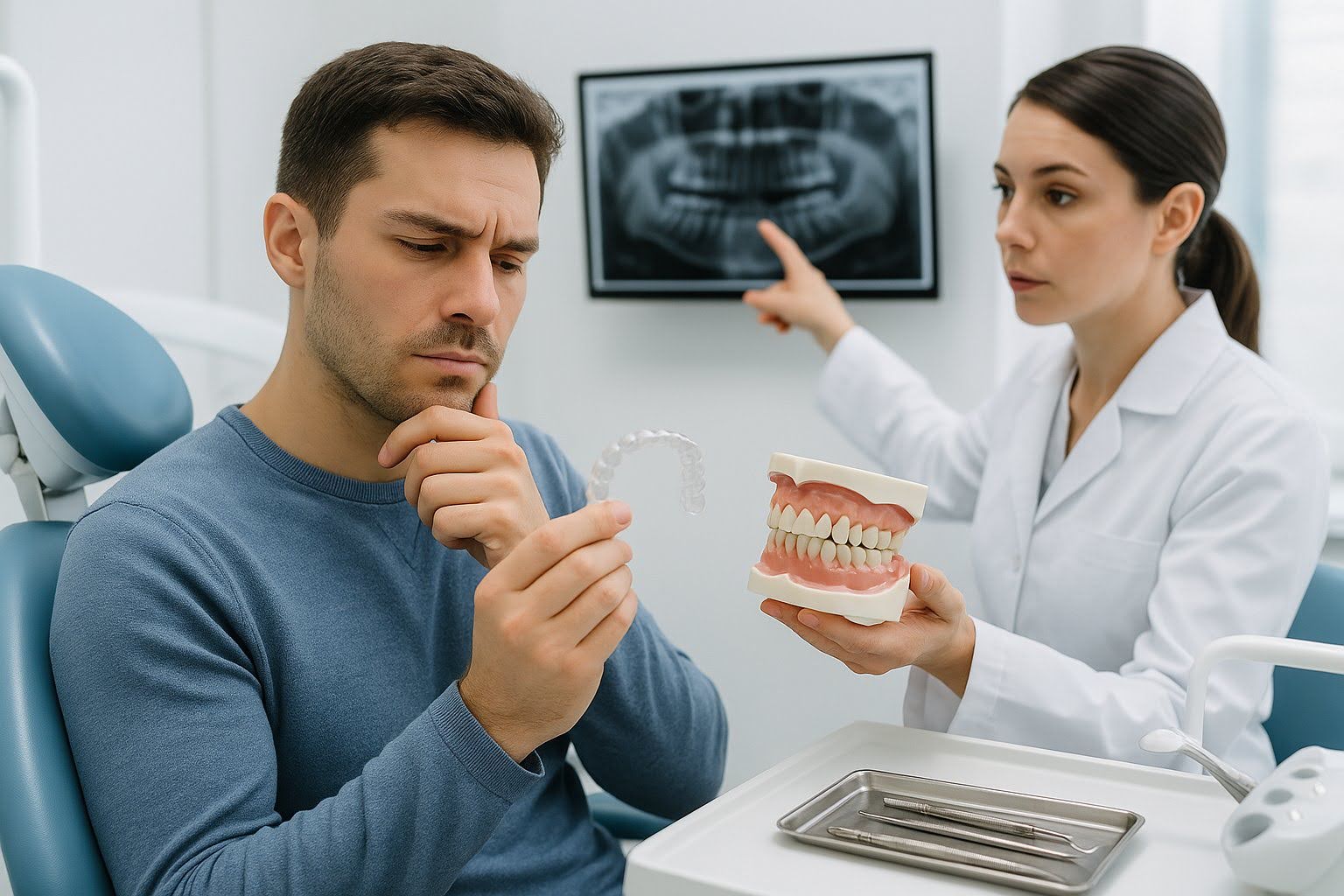

What Cannot Be Fixed by Invisalign?
When considering Invisalign, it’s essential to understand its limitations. While it can effectively straighten teeth, it struggles with severe crowding, complex movements, and impacted teeth. Issues like significant jaw misalignments or dental bridges can further complicate treatment. Additionally, any active dental problems must be addressed first. So, what are the specific conditions that might necessitate alternatives to Invisalign? Let’s explore these challenges further.
Severe Crowding and Complex Tooth Movements
When you face severe crowding in your dental arch, it can be challenging to achieve the desired alignment using Invisalign alone. This condition often involves pronounced overlapping and twisting of teeth, which requires significant space creation that aligners can’t provide. While Invisalign applies gentle pressure for tooth movement, it falls short with complex movements like severe rotations or deep overbites. Attachments may enhance grip, but they can’t fully compensate for multidirectional repositioning. Furthermore, heavy force control needed for extrusions or intrusions is better managed by traditional braces. If you have severe crowding, consider that adjunct treatments or alternative orthodontic options might be necessary to guarantee effective and thorough correction.
Impacted Teeth and Surgical Needs
While impacted teeth can complicate orthodontic treatment, understanding their limitations is vital for effective management. Invisalign cannot address impacted canines or other teeth that are partially or fully trapped beneath the gumline. Since Invisalign requires visibility and accessibility, you’ll likely need surgical exposure to guide these teeth into proper alignment. Traditional braces, combined with surgical intervention, are necessary for effective treatment. Additionally, complex cases involving severe malocclusions or jaw discrepancies often require orthognathic surgery, which Invisalign is not equipped to handle. Consequently, a thorough clinical assessment, including imaging, is essential to determine whether surgical orthodontics or traditional braces should be your path forward, ensuring the best outcomes for your dental health.
Dental Bridges and Aligners Compatibility
Understanding the compatibility of dental bridges with Invisalign is vital for effective orthodontic treatment. Fixed bridges pose significant bridge limitations since they’re permanently cemented and can’t be removed. This immobility restricts the movement of adjacent teeth, limiting the effectiveness of aligners. However, if you have removable bridges, you’ll find it much easier to use Invisalign. You can take out the bridge, allowing aligners to fit snugly over your teeth and facilitating better tooth movement during treatment. It’s important to consult your dentist to guarantee the bridge’s removability aligns with your Invisalign treatment plan. Remember, after treatment, you may need to adjust the bridge to accommodate any changes in your teeth’s alignment.
Active Dental Issues and Treatment Readiness
After considering the compatibility of dental bridges with Invisalign, it’s important to address active dental issues that can impede your readiness for treatment. If you have gum disease, such as periodontitis or gingivitis, these conditions must be managed before starting Invisalign. Active inflammation and bone loss can destabilize tooth movement, compromising treatment outcomes. Additionally, untreated cavities or decay require resolution, as moving weakened teeth risks structural damage. Effective oral hygiene is essential; aligners can trap bacteria, worsening gum inflammation and decay. You must achieve periodontal stability and have restored, healthy teeth before pursuing aligner therapy. Without addressing these active dental issues, you won’t qualify for Invisalign, emphasizing the need for a solid foundation of oral health.
Significant Jaw Misalignments
Significant jaw misalignments present unique challenges that Invisalign simply can’t address effectively. If you have skeletal discrepancies, such as severe overbites or underbites, Invisalign alone won’t provide the necessary correction. Complex cases often require orthognathic surgery to properly reposition the jaws, as Invisalign is limited to tooth movement and cannot modify the jawbone’s size or position. Similarly, profound facial asymmetries and severe open bites linked to jaw growth issues necessitate surgical options. While Invisalign can assist in aligning teeth before or after surgery, it can’t replace the need for surgical intervention in these cases. Consulting with an orthodontist is essential to determine the most effective treatment plan for your specific jaw alignment issues.
High Compliance Requirements and Patient Responsibility
How essential is your commitment to the success of your Invisalign treatment? Your adherence to wearing aligners for 20 to 22 hours daily directly impacts your treatment outcomes. Studies reveal that only 36% of patients achieve full compliance, underscoring the need for strong patient motivation. If you fall below this threshold, you risk not meeting treatment expectations, potentially leading to treatment failure. Utilizing digital tools like mobile apps can enhance your adherence by tracking progress and sending reminders, making it easier to stay committed. Remember, your responsibility in following the treatment plan and making necessary lifestyle adjustments is vital. Addressing psychosocial factors like stress can also help maintain your motivation, ensuring you achieve the best results from your Invisalign journey.
Frequently Asked Questions
Can Invisalign Fix Gaps Larger Than 6mm?
Invisalign can’t effectively achieve gap closure for spaces larger than 6 mm due to treatment limitations. For such gaps, you may need alternative orthodontic methods, like traditional braces or restorative procedures, to guarantee proper alignment.
How Does Invisalign Handle Rotated Teeth?
Invisalign effectively handles mild to moderate rotated teeth by applying gentle pressure through custom aligners. However, severe rotations beyond 20 degrees may require traditional braces for ideal correction and improved alignment.
Will Invisalign Impact My Speech Long-Term?
Invisalign may temporarily affect your speech clarity, but long-term effects are generally minimal. Most patients adapt within weeks, and significant speech improvement often occurs, particularly with consistent aligner wear and proper dental monitoring.
Can I Wear Invisalign While Playing Sports?
Yes, you can wear Invisalign while playing sports, especially low-impact ones. Prioritize sports safety by using a custom mouthguard for contact sports, ensuring Invisalign comfort and protection for both your aligners and teeth during activities.
What Happens if I Lose an Aligner?
If you lose an aligner, contact your orthodontist for an aligner replacement. Continue wearing the previous aligner to maintain progress. Proper aligner maintenance, like storing them in cases, can help prevent future losses.