

Can I Brush My Teeth With Invisalign In?
You might be wondering if it’s okay to brush your teeth while wearing your Invisalign aligners. It’s a common question, but doing so isn’t advisable. Brushing with aligners can cause damage to both your teeth and the aligners themselves. Understanding why it’s important to remove them first is essential for maintaining your oral health. Let’s explore the best practices for keeping your teeth and aligners in ideal condition.
Understanding the Importance of Removing Aligners
Removing your Invisalign aligners at the right times is crucial for maintaining oral health and guaranteeing effective treatment. Start by removing them from the back molars to prevent damage to your teeth or attachments. Use your fingertips for gradual loosening; pulling too quickly can lead to cracking or warping. For better grip, especially if you have long nails, consider using specific Invisalign removal tools. Always make sure your hands are dry before removal to avoid slipping. Not removing your aligners during meals can trap food particles, increasing the risk of plaque buildup and dental decay. Consistent aligner removal and proper hygiene practices are essential for preventing complications, making sure your treatment stays on track for the best results.
Choosing the Right Toothbrush for Invisalign
Maintaining proper oral hygiene during your Invisalign treatment involves not just the careful removal of aligners, but also selecting the right toothbrush. You should opt for a soft-bristled toothbrush to gently clean around the gum line without damaging your aligners. If you prefer electric toothbrushes, choose gentle models with pressure sensors and cleaning modes specifically designed for orthodontic use. Electric toothbrushes offer advantages like efficiency in plaque removal and ease of use, especially if you have limited dexterity. Additionally, consider manual brushes for cleaning your aligners, as they’re less likely to scratch. Prioritizing the right toothbrush types guarantees effective cleaning while protecting your Invisalign aligners from potential damage.
Proper Brushing Technique With Invisalign
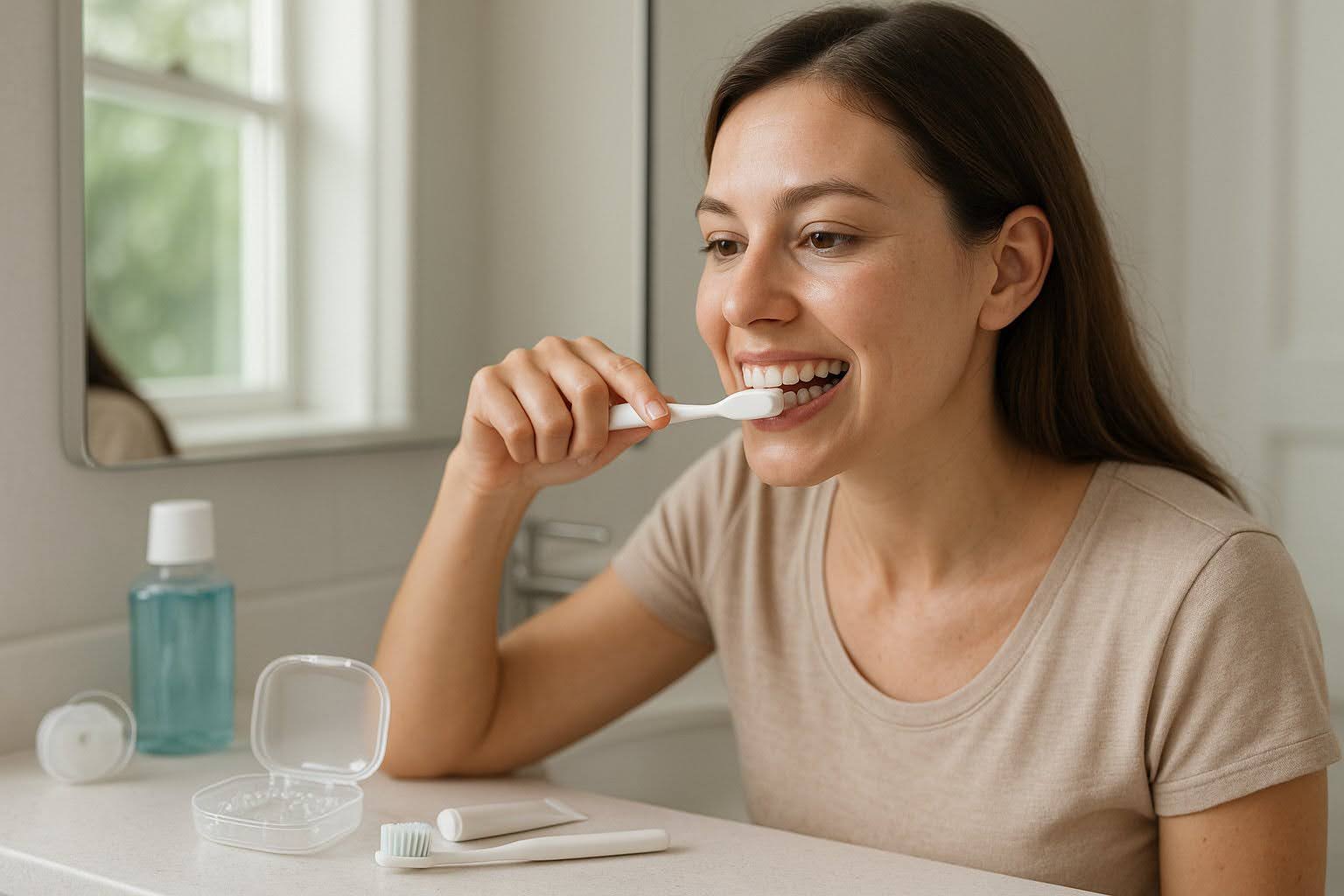
To achieve ideal oral hygiene during your Invisalign treatment, it’s essential to brush your teeth correctly. Start by removing your aligners before brushing, as brushing with them in place won’t effectively clean your teeth. Aim to brush after every meal or snack, ensuring your teeth are clean before reinserting the aligners. Use a soft-bristled toothbrush and hold it at a 45-degree angle to your gums, employing gentle circular motions for a full two minutes. Incorporate flossing into your routine, flossing after brushing to remove plaque between your teeth. Consistent dental hygiene practices will help prevent decay and gum issues throughout your treatment, keeping your smile healthy and bright.
Avoiding Damage to Your Aligners
After you’ve mastered the proper brushing technique, the next focus is on protecting your aligners from potential damage. For effective aligner care, always use a manual soft-bristled toothbrush with non-abrasive cleanser. Avoid hard-bristled brushes and vigorous scrubbing, as these can scratch the aligners, leading to cloudiness and bacterial buildup. Remember, brushing while your aligners are in can bend or deform them, so always remove them first. Handle your aligners gently and store them in a clean, dry case when not in use to prevent physical damage and contamination. Following these cleaning tips guarantees your aligners remain clear and effective, reducing the risk of discomfort and prolonging your treatment duration.
The Necessity of Brushing After Meals
Brushing your teeth after meals is essential for maintaining ideal oral health, especially when using Invisalign. The timing of your brushing plays an important role in reaping the brushing benefits. By brushing immediately after meals, you remove food particles that feed bacteria, greatly reducing the risk of tooth decay and gum disease. This practice also prevents food from getting trapped under your aligners, ensuring their effectiveness. Frequent brushing helps control bacterial growth, which is especially important with the reduced saliva flow caused by Invisalign. Additionally, it keeps your breath fresh and prevents staining of both your teeth and aligners. Prioritizing brushing after meals is a key step in your oral hygiene routine while undergoing orthodontic treatment.
Additional Hygiene Practices to Consider
Maintaining oral hygiene goes beyond brushing after meals; several additional practices can enhance your care routine while using Invisalign. Make sure to clean your aligners daily with mild soap and a soft-bristled toothbrush to prevent bacterial buildup. When they’re not in use, store your aligners in a designated container to avoid loss or damage. Incorporating an antiseptic mouthwash into your routine can help kill bacteria and freshen your breath, but remember to avoid it while wearing aligners to prevent staining. Floss daily and rinse with water after meals to eliminate food particles. Regular dental visits are essential for monitoring your oral health throughout your treatment, ensuring you stay on track toward a beautiful smile.
Maintaining Oral Hygiene on the Go
Traveling or busy schedules shouldn’t compromise your oral hygiene while using Invisalign. A well-prepared travel dental kit is essential for maintaining cleanliness on the go. Include a compact toothbrush, fluoride toothpaste, and floss to guarantee you can brush after meals. Always remove your aligners before brushing to avoid trapping food particles, and remember to rinse your mouth thoroughly if brushing isn’t an option. This helps reduce bacteria before reinserting your aligners. Additionally, consider using antimicrobial mouthwash to control plaque. With these strategies, you can effectively manage your oral hygiene, keeping your teeth and aligners in top condition while adhering to the recommended 20-22 hours of daily wear. Prioritize your dental health, even when you’re busy!
The Role of Regular Dental Check-Ups
While you might think that good oral hygiene at home is enough, regular dental check-ups are essential for maintaining ideal oral health. Studies show that those who attend regular check-ups experience fewer dental caries and retain more teeth. Consistent dental visits contribute to a better self-reported oral health status and enhance your overall quality of life. Despite the benefits, many adults skip these appointments, leading to untreated conditions like tooth decay and gum disease. Factors such as income and education level can influence your likelihood of attending regular check-ups. To guarantee long-term oral health, prioritize these visits as part of your routine, helping prevent complications that can arise from neglecting your dental care.
Frequently Asked Questions
Can I Use Whitening Toothpaste While Wearing Aligners?
You shouldn’t use whitening toothpaste while wearing aligners, as it can cloud them. Focus on maintaining your aligners with non-whitening products, ensuring your teeth receive whitening effects without compromising aligner clarity or effectiveness.
How Often Should I Clean My Aligners?
You should clean your aligners daily using effective cleaning methods, ideally before bedtime. Regular aligner maintenance includes gentle brushing and soaking 2 to 3 times a week to prevent bacteria buildup and staining.
What Should I Do if I Lose an Aligner?
If you lose an aligner, contact your orthodontist for an aligner replacement. In the meantime, store your previous aligners safely and continue wearing them to maintain your treatment progress and avoid delays.
Can I Eat or Drink With Aligners In?
You shouldn’t eat or drink anything except water with aligners in. Eating restrictions apply to avoid damage, while beverage choices should be limited to cold water only, preventing stains and warping of your aligners.
How Long Should I Wear My Aligners Each Day?
You should wear your aligners for 20 to 22 hours each day. Incorporating this into your daily routine guarantees consistent pressure on your teeth, following the aligner schedule for ideal treatment success and timely completion.
