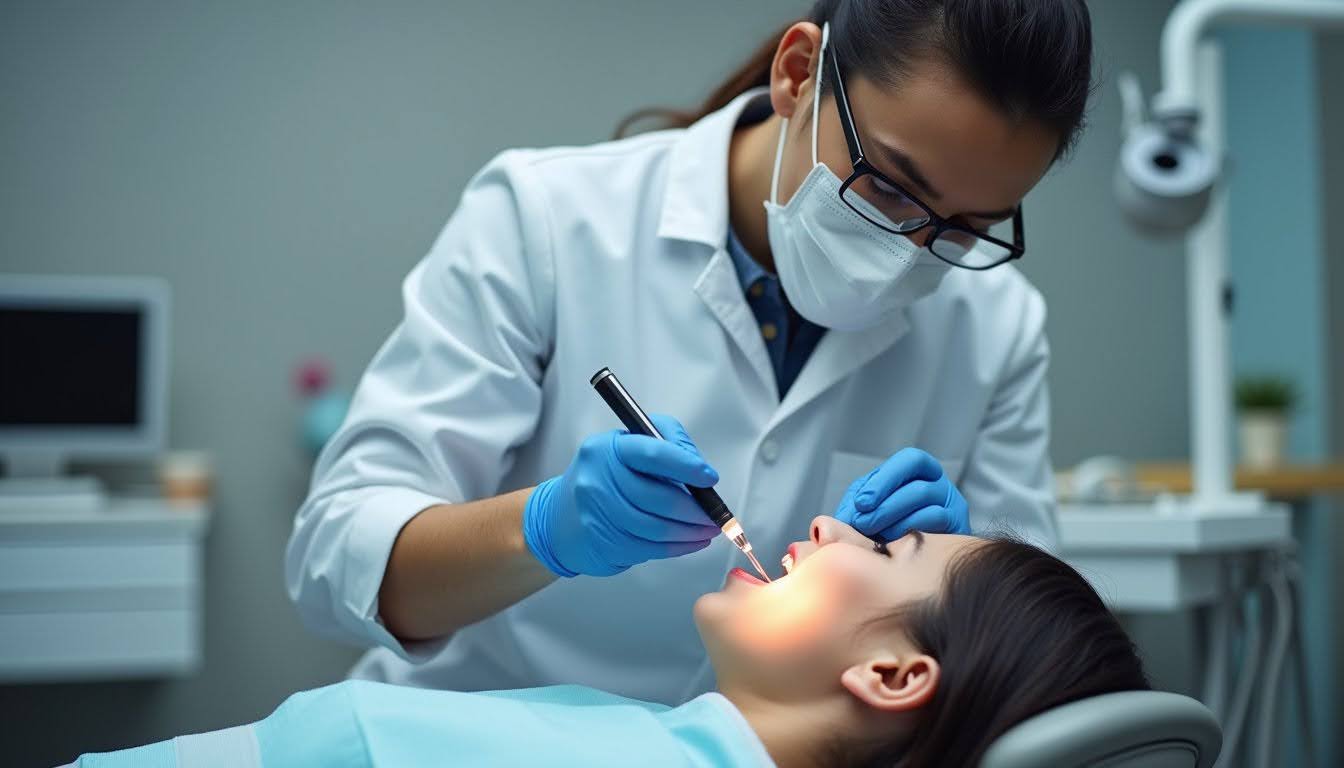

TMJ in Chicago: Why Cases Are Rising Among Remote Workers (And What’s Behind It)
Your jaw hurts. Your head aches. Your teeth feel sore in the morning.
You blame the screen. The posture. The stress.
You might be right about all three.
The Connection Between Stress and Your Jaw
When you feel stressed, your body responds. Shoulders tense. Neck tightens. And for many people, the jaw clenches.
This is called bruxism. It means grinding or clenching your teeth, often without knowing it. And it has become far more common.
A 2024 review published in Experimental and Therapeutic Medicine found that bruxism affects 60 to 70% of the population. But here is the surprising part: only 1 in 4 people with symptoms are aware they have it.
You could be grinding your teeth every night and have no idea.
Two Types of Bruxism
Researchers divide bruxism into two categories based on when it happens.
Sleep bruxism occurs at night. You grind or clench while you are asleep. This type involves rhythmic muscle movements and sometimes audible grinding sounds. A systematic review found the prevalence of sleep bruxism at around 12.8% of adults.
Awake bruxism happens during the day. You clench your jaw while working, driving, or concentrating. This type is more common, with prevalence estimates ranging from 22 to 31% of adults.
Many people have both. And most do not realize it until damage shows up.
The Stress Link Is Real
Researchers have studied the connection between stress and bruxism for years. The evidence keeps getting stronger.
A 2021 systematic review and meta-analysis looked at studies examining this relationship. The findings were clear. Stressed individuals are about twice as likely to have bruxism compared to those without stress. The odds ratio was 2.07, which means stress roughly doubles your risk.
A 2022 study of university students found that 39.3% had bruxism. The researchers found significant associations between bruxism and stress, panic, and restlessness. Students who reported higher stress during the pandemic showed higher rates of teeth grinding.
The pattern repeats across populations. More stress means more clenching. More clenching means more problems.
Why Remote Work Makes It Worse
Remote work changed how we use our bodies. And not always for the better.
Screen time increased. Video calls became constant. People stare at monitors for hours without breaks. The concentration required for virtual meetings often triggers jaw clenching.
Posture suffered. Kitchen tables are not ergonomic workstations. Couches are not office chairs. Poor posture puts strain on the neck and jaw. The muscles connect, and tension spreads.
Boundaries blurred. When home is work, stress does not turn off. The mental load stays high. And the body keeps responding.
Isolation added pressure. Working alone removes the natural breaks of office life. No walk to a meeting room. No chat at the coffee machine. Just hours of focused tension.
These factors combined to create perfect conditions for jaw problems.
From Bruxism to TMJ Disorders
Bruxism does not always cause major issues. But when it does, the problems often show up in the temporomandibular joint. This is the hinge that connects your jaw to your skull. You have one on each side of your face.
TMJ disorders (often called TMD) include pain in the jaw joint, difficulty opening or closing your mouth, clicking or popping sounds, and chronic headaches.
The global prevalence of TMJ disorders is estimated at approximately 30% of adults. A 2024 meta-analysis found some geographic variation: South America at 47%, Asia at 33%, Europe at 29%, and North America at 26%.
The connection between bruxism and TMD is well established. Chronic grinding overloads the jaw muscles and joints. Over time, this leads to inflammation, wear, and pain. Research confirms that the presence of bruxism increases the likelihood of developing TMJ disorders.
Warning Signs You Should Not Ignore
Bruxism and TMJ problems often develop slowly. The signs can be easy to miss or dismiss. Pay attention to these:
Morning jaw pain or stiffness. If your jaw feels tired or sore when you wake up, you may be clenching at night.
Headaches, especially in the temples. The muscles you use to clench connect to the sides of your head. Tension headaches often trace back to the jaw.
Tooth sensitivity or wear. Grinding wears down enamel over time. Teeth may look flatter or feel more sensitive to hot and cold.
Clicking or popping when you open your mouth. This can indicate changes in the jaw joint. It is not always painful, but it signals something is off.
Earaches without ear infection. The TMJ sits right in front of your ear. Problems there can feel like ear pain.
Neck and shoulder tension. The muscles work together. Jaw tension often spreads to the neck and shoulders.
Teeth that no longer fit together the way they used to. Changes in your bite can result from grinding or joint changes.
Women Are Affected More Often
Research consistently shows that women experience bruxism and TMJ disorders at higher rates than men.
One study found that women are 3.19 times more likely to have dental anxiety, which often coexists with bruxism. Another noted a female-to-male ratio of 5 to 1 for bruxism symptoms.
The reasons are not fully understood. Hormonal factors may play a role. Women also report higher rates of stress and anxiety in many studies, which connects to the stress-bruxism link.
Regardless of the cause, women should be especially aware of the warning signs.
What You Can Do
The first step is awareness. If you recognize the symptoms, you can take action before the damage gets worse.
Pay attention during the day. Set reminders to check your jaw position. Are your teeth touching? Is your jaw clenched? At rest, your teeth should be slightly apart with your tongue resting on the roof of your mouth.
Manage stress actively. Exercise helps. So does limiting caffeine and alcohol, which can increase muscle tension. Find what works for you and make it a habit.
Improve your workspace. Position your monitor at eye level. Use a chair that supports good posture. Take breaks to move and stretch.
Talk to your dentist. A dental exam can reveal signs of grinding you might not notice. Worn enamel, cracked teeth, and changes in your bite all point to bruxism.
Consider a night guard. A custom night guard protects your teeth while you sleep. It cushions the force of clenching and prevents wear. Over-the-counter options exist, but a custom fit from your dentist works better and lasts longer.
Explore treatment options. For TMJ pain, treatment ranges from physical therapy to bite adjustments to medication. In some cases, therapeutic Botox can relax overactive jaw muscles. Your dentist can help determine what makes sense for you.
Do Not Wait for Pain
Many people ignore early signs of bruxism because it does not hurt yet. By the time pain arrives, damage has often accumulated.
Cracked teeth need crowns. Worn enamel cannot grow back. Joint damage can become chronic. The cost of waiting is higher than the cost of prevention.
If you work from home, spend hours on video calls, or carry stress in your body, your jaw may be paying the price. A simple checkup can tell you where you stand.
Your jaw works hard for you. It is worth protecting.